A miscalibrated flow meter can cost your water or wastewater plant thousands in wasted energy and inefficiency often without triggering any immediate alarms on the control system. In daily operations, even small measurement errors can quietly affect pump efficiency, chemical dosing, and regulatory reporting. Understanding the flow meter calibration frequency is key to preventing these hidden inefficiencies and ensuring reliable, accurate measurements throughout your plant. In this article, we explore best practices for calibrating flow meters, factors that influence calibration intervals, and practical techniques to maintain continuous accuracy in water and wastewater systems.
Flow Meter Calibration Frequency in Water & Wastewater Plants
Flow meters in water and wastewater treatment plants are essential for monitoring flow through pipelines and treatment units. Accurate readings are critical for operational efficiency, safety, and regulatory compliance. Understanding the flow meter calibration frequency is crucial. For electromagnetic flow meters calibration is typically performed annually, or more frequently in critical systems, using in-situ methods to ensure reliable operation without removing the meter.
Typical Calibration Intervals:
- Annual Calibration: Most meters are calibrated once a year to maintain compliance and operational reliability in municipal and industrial water systems.
- More Frequent Checks: Critical systems or high-accuracy meters may require monthly or predictive calibration techniques to maintain safety and process efficiency.
- Extended Intervals: Less critical meters may require calibration every three to four years, depending on usage, operational conditions, and historical performance.
Installation & Maintenance Considerations:
- Calibration is essential after installing a new meter or performing repairs.
- In-situ Calibration: Techniques such as piston provers allow precise verification without removing the meter, ensuring uninterrupted and accurate process monitoring.
Key Factors That Affect Flow Meter Calibration Intervals
The following factors determine how often a flow meter should be calibrated in water and wastewater applications:
- Application: The specific use of the meter, such as process control or billing, influences calibration needs.
- Meter Type: Electromagnetic, ultrasonic, vortex, and positive displacement meters have distinct calibration requirements.
- Operating Environment: Exposure to high temperatures, corrosive fluids, pressure fluctuations, or high-solids content can affect flow meter accuracy and may require more frequent calibration. Calibration schedules should be adjusted based on actual process conditions rather than relying solely on general manufacturer recommendations.
- Manufacturer Recommendations: Always follow the manufacturer’s guidance for suggested intervals.
- Usage & Historical Performance: Meters with heavy usage or past inaccuracies may require shorter calibration cycles.
How Often Should a Flow Meter Be Calibrated in Water Applications?
The flow meter calibration frequency in water applications is typically once a year, but it can vary depending on meter type, application, and manufacturer guidelines. Calibration is especially important after installation or repairs, and whenever the fluid characteristics or operating conditions change significantly. For high-precision systems or meters with a history of drift, more frequent checks such as every six months may be required. Following manufacturer recommendations and considering regulatory requirements ensures accurate and reliable meter performance.
3 Steps to Ensure Accurate Flow Meter Calibration Every Time
1- Monitor Daily Readings: Keep an eye on flow deviations to catch issues early.
2- Use Reference Devices: Quick on-site verification prevents costly errors.
3- Document Everything: Maintain detailed records for audits and maintenance efficiency.
On-Site Flow Meter Calibration in Water Treatment Plants
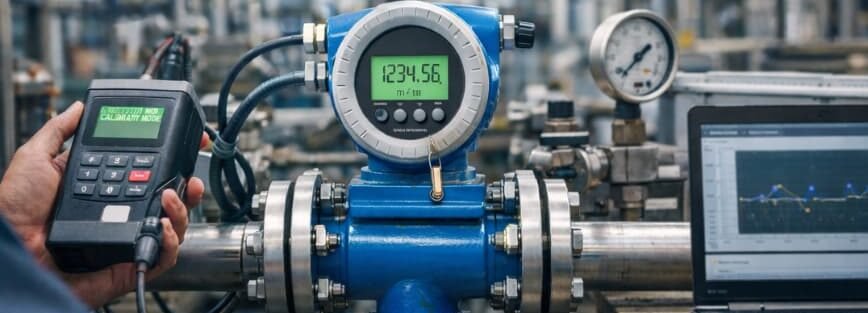
On-site calibration allows technicians to verify and adjust flow meters directly in the plant without interrupting operations. This approach accounts for actual process conditions such as pressure, temperature, and fluid characteristics.
Common techniques include:
- Piston provers for precise verification
- Portable calibration rigs for flexible on-site checks.
- Reference meters to compare readings and detect drift.
Regular on-site calibration helps detect early signs of meter inaccuracy, equipment wear, or installation issues, reducing the risk of operational inefficiencies and ensuring regulatory compliance. Maintaining a documented calibration schedule ensures consistency, minimizes downtime, and extends meter lifespan.
Signs That a Flow Meter Needs Recalibration in Water Systems
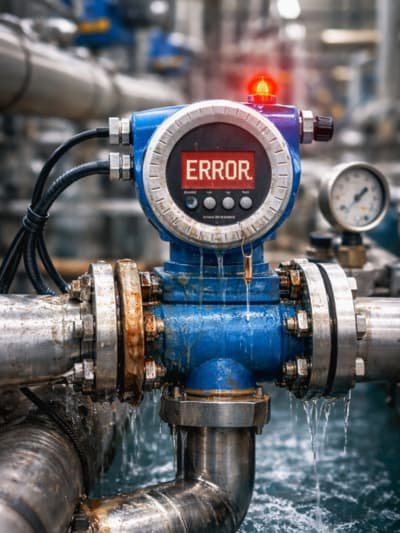
Detecting when a flow meter requires recalibration is crucial for maintaining accurate measurements and smooth plant operations. Key indicators include:
- Unexpected reading variations: Sudden changes in flow measurements that do not match actual process conditions.
- Fluctuating process performance: Inconsistent pumping efficiency or chemical dosing, suggesting inaccurate data.
- Frequent system alerts: Repeated alarms related to flow rates may indicate sensor or calibration issues.
- Physical wear or damage: Corrosion, fouling, or mechanical wear affecting meter accuracy.
- Post-maintenance discrepancies: After repairs, component replacements, or process changes, readings should be verified to ensure reliability.
By monitoring these signs, technicians can schedule recalibration only when necessary, preventing operational inefficiencies while avoiding unnecessary maintenance.
Applicable Standards for Flow Meter Calibration in Potable Water Networks
Flow meter calibration in potable water networks must comply with recognized international and national standards to ensure accuracy, reliability, and regulatory compliance. Key standards include:
- ISO 4064:Specifies requirements for water meter construction, testing, and calibration.
- OIML R49: Provides guidelines for verification and accuracy of water meters.
Adhering to these standards ensures consistent measurements, accurate billing, and reliable water quality monitoring. Maintaining detailed calibration records further enhances traceability and supports audits or regulatory inspections.
How to Set a Cost-Effective Calibration Plan for Water Plants
A cost-effective calibration plan ensures accurate flow measurements while optimizing resources. Start by prioritizing critical meters based on their impact on operations, regulatory compliance, and billing. Establish calibration intervals according to manufacturer recommendations, historical performance, and environmental conditions.
Implement on-site calibration techniques where feasible to reduce downtime and labor costs. Maintain a centralized calibration schedule and documentation system to track meter status, upcoming calibrations, and past results. Combining routine calibration with predictive maintenance strategies allows early detection of drift or anomalies, minimizing the risk of costly process disruptions while extending the service life of flow meters.
Need Flow Meter Calibration Support in Your Water Plant?
Accurate flow measurements are essential for water plant efficiency, regulatory compliance, and operational safety. RETQAN provides professional flow meter calibration services tailored to your facility’s needs, including on-site verification, in-situ calibration, and complete documentation for electromagnetic, ultrasonic, and vortex meters.
With extensive experience in water and wastewater treatment plants, our team delivers reliable, cost-effective solutions that minimize downtime, detect flow drift early, and optimize process performance, keeping your plant running at peak efficiency while ensuring compliance with industry standards.
Conclusion
Maintaining accurate flow meter readings is essential for operational efficiency, regulatory compliance, and cost-effective water management. By following a structured calibration plan, performing regular checks, and adhering to industry standards, water and wastewater plants can ensure reliable data, prevent costly downtime, and extend the lifespan of their meters. Proper calibration not only supports accurate measurements but also strengthens overall plant performance and decision-making.
FAQ
1. What is ISO 5167?
ISO 5167 provides guidelines for measuring fluid flow using pressure differential devices, such as nozzles, Venturi tubes, and orifice plates, installed in circular pipes. Adhering to this standard ensures accurate and consistent flow measurement across water systems
Can predictive maintenance replace fixed calibration intervals?
Yes, predictive maintenance can complement or eventually replace fixed calibration schedules, particularly for meters where measurement precision is critical. By monitoring trends and equipment performance, potential inaccuracies can be detected and addressed proactively.
3. How to detect flow meter drift or inaccuracy?
Flow meter drift or inaccuracy can be identified using:
- Alarm tolerance monitoring
- Comparative metering with reference devices
- Process trend analysis
- Scheduled periodic calibration checks