

A legacy PLC upgrade is the process of assessing, modernizing, or replacing an outdated programmable logic controller that may expose a plant to unsupported hardware, limited spare availability, obsolete software, integration constraints, or difficult maintenance. Industrial plants need PLC modernization when the control system can no longer be supported, documented, expanded, or recovered with reasonable confidence. The correct response may be a complete replacement, a partial migration, or a retrofit—not automatically a new controller. A structured assessment helps decision-makers protect continuity, prioritize risk, and select a practical modernization roadmap.
Quick Answer: When Does a PLC System Need Modernization?
A PLC system needs modernization when its hardware is approaching or beyond the manufacturer’s supported lifecycle, critical modules are difficult to source, programming tools no longer run reliably, or the system cannot integrate with required networks, SCADA, data, or safety functions. Persistent troubleshooting, undocumented changes, limited diagnostics, and expansion constraints are additional warning signs. Modernization becomes a business-continuity decision when one failure could leave the plant without a tested recovery path. A lifecycle review should come before selecting hardware or promising a specific migration outcome.[1]
What Is a Legacy PLC Upgrade?
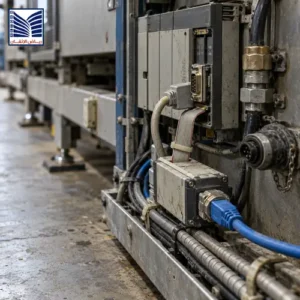
A legacy PLC may still operate while its technical supportability declines. Age alone is not decisive; review lifecycle status, spares, software access, engineering knowledge, compatibility, cybersecurity exposure, diagnostics, and failure consequences.
PLC modernization improves supportability, capability, documentation, connectivity, and maintainability. It may include controller migration, I/O or network changes, HMI/SCADA integration, software conversion, testing, and commissioning.
The main approaches are:
- Migration: Move the application to a newer platform, with logic review and validation; conversion alone does not prove process behavior.
- Replacement: Install a new control architecture, potentially requiring rewiring, software redevelopment, testing, and cutover planning.
- Retrofit: Upgrade selected components while retaining suitable panels, wiring, instruments, or interfaces; retained dependencies must be documented.
The appropriate choice depends on application, criticality, constraints, and long-term goals. Migration guidance commonly treats audit, analysis, strategy, planning, migration, and acceptance testing as connected stages.[2]
7 Signs Your Control System Needs a Legacy PLC Upgrade
1. PLC Hardware Is No Longer Supported
Check lifecycle status for the CPU, I/O, power supplies, communication cards, cables, and expansion hardware. Even when a controller runs, recovery risk increases if firmware, repairs, documentation, or compatible modules are difficult to obtain. Ask whether the team can source a compatible spare, diagnose failure, restore the application, and test it under controlled conditions.
2. Software and Programming Tools Are Becoming Obsolete
Legacy systems may depend on old operating systems, discontinued programming software, license mechanisms, drivers, or communication interfaces. Review the programming environment, archives, firmware, libraries, upload/download capability, and source-code integrity. Modernization becomes more urgent when these limitations prevent troubleshooting, version control, testing, or recovery.
3. Spare Parts Availability Is Becoming Difficult
Long lead times, discontinued modules, used-equipment dependence, and limited repair options can create a single-point failure. A spare is useful only if its firmware, hardware revision, memory, configuration, and condition are compatible. Inventory critical components and identify substitutes, repair routes, and test requirements before failure.
4. The PLC Cannot Easily Integrate With Modern Systems
A legacy controller may lack practical support for current Ethernet, remote I/O, historian, cybersecurity, asset-data, or SCADA systems requirements. Protocol converters can bridge gaps but add dependencies. Assess ports, protocols, data structures, scan behavior, time synchronization, HMI tags, alarms, and data visibility. A SCADA and HMI integration approach should be reviewed with the PLC and network as one system.
5. Maintenance Teams Spend More Time Troubleshooting
A rising maintenance burden may appear as repeated I/O faults, intermittent communication alarms, unexplained resets, difficult-to-read diagnostics, obsolete test equipment, or recurring workarounds. Aging power supplies, backplanes, connectors, memory components, and communication cards can also create symptoms that are hard to reproduce.
Track troubleshooting hours, repeat failures, unavailable diagnostics, documentation gaps, and dependence on individual technicians. Modernization is not justified by age alone, but a persistent inability to isolate faults is a reliability signal that deserves a formal assessment.
6. Production Expansion Requires More Capability
A plant expansion may require additional digital or analog I/O, faster communications, remote stations, motion control, recipe handling, safety integration, higher data capacity, or new HMI functions. If the legacy PLC has no available slots, limited memory, restricted instruction support, or incompatible communication options, expansion may become a collection of fragile workarounds.
Review current and future I/O counts, spare capacity, network architecture, scan-time requirements, control functions, instrument interfaces, and data needs. A modernization roadmap should address future scalability, not only the immediate shortage.
7. The System Creates Business Continuity Concerns
Unexpected PLC failure becomes a business-continuity risk when no verified project backup exists, the configuration is undocumented, replacement hardware is uncertain, or the engineering software cannot be recovered. The risk is higher when a single controller governs critical utilities, production lines, safety-related sequences, or interconnected equipment.
Perform a risk assessment that considers failure modes, detection, spare strategy, recovery time, process consequences, and available maintenance expertise. The result may be immediate migration, a controlled retrofit, improved backup and documentation, or planned replacement during a suitable outage. The important point is to make the decision before failure forces it.
Legacy PLC Replacement vs PLC Modernization: Which Approach Fits?
The terms replacement and modernization are related but not identical. Replacement describes the hardware change; modernization includes the wider control-system, software, network, documentation, testing, and lifecycle decisions.
| Option | Suitable When | Main Consideration |
|---|---|---|
| Complete replacement | The controller, software environment, and critical modules are obsolete or the application needs a new architecture | Requires detailed logic review, I/O mapping, testing, commissioning, and cutover planning |
| Partial migration | The plant needs a staged transition or wants to retain selected panels, field devices, or interfaces | Requires clear boundaries between old and new systems and a plan for temporary gateways or coexistence |
| Retrofit modernization | Existing field wiring, instruments, or machine interfaces remain suitable while selected control components are upgraded | Preserves some legacy dependencies, so interface testing and residual-risk documentation are essential |
A decision should consider process criticality, available outage windows, application complexity, documentation quality, staff capability, future expansion, and the consequences of an unsuccessful cutover. It should not be based on a product label or a general assumption that every old PLC requires the same solution.
How to Evaluate PLC Obsolescence Risk
Use a lifecycle-risk scorecard to rank assets consistently. A simple low, medium, and high rating can help plant leaders prioritize engineering work, but the score should be supported by evidence.
| Assessment Area | Questions to Review |
|---|---|
| Hardware availability | Is the CPU, I/O, power supply, communication hardware, and memory still supported or obtainable? |
| Software support | Can the engineering software, licenses, drivers, libraries, and operating environment be recovered and maintained? |
| Spare parts | Are tested spares available, or does the plant depend on used, repaired, or interchangeable modules? |
| Communication capability | Can the PLC meet current HMI, SCADA, network, remote-I/O, historian, and data requirements? |
| Cybersecurity considerations | Can access, segmentation, patching, account control, backups, and monitoring be managed within the plant’s requirements? |
| Maintenance knowledge | Are current personnel able to diagnose, modify, test, and restore the system without relying on one unavailable specialist? |
Add application criticality, failure history, documentation quality, recovery time, and expansion requirements to the scorecard. A high score indicates that the asset deserves a documented engineering decision; it does not automatically prescribe replacement.
Steps for a Successful PLC Modernization Project
A practical modernization framework should connect technical work with operating risk:
- Current system assessment: Record PLC models, I/O, firmware, networks, HMI/SCADA interfaces, panel condition, field devices, backups, and application dependencies.
- Hardware and software review: Check lifecycle status, programming tools, libraries, project integrity, spare parts, firmware, and compatibility with candidate platforms.
- Risk identification: Identify single points of failure, undocumented logic, safety or interlock dependencies, outage constraints, cybersecurity gaps, and difficult-to-test functions.
- Migration strategy selection: Compare complete replacement, partial migration, retrofit, or a risk-reduction phase such as documentation and backup recovery. Define what remains unchanged and what must be re-engineered.
- Testing and validation: Build I/O lists, logic test cases, simulation or factory tests where practical, network checks, alarm tests, interlock tests, and application acceptance criteria.
- Commissioning plan: Define isolation, cutover sequence, rollback conditions, startup checks, operator training, as-built documentation, and post-commissioning support.
Phased modernization may be appropriate when the plant cannot change all assets at once. However, each phase needs an interface definition, baseline, test result, and owner so that temporary architecture does not become permanent by accident.[1]
Why PLC Modernization Requires Engineering Assessment
A modernization decision should begin with the existing system, not a catalog number. Review logic, sequences, alarms, permissives, interlocks, recipes, I/O behavior, communications, drawings, instrument interfaces, and process requirements. Identify undocumented online changes and compare the archive with the running controller where possible.
Check CPU/I/O architecture, firmware, memory, language, libraries, networks, HMI/SCADA tags, safety functions, drives, remote stations, and maintenance tools. Define what can be tested offline, in a factory environment, on a test rack, or during a controlled outage. This prevents both uninformed replacement and indefinite postponement.
How Industrial Automation Support Helps With PLC Migration
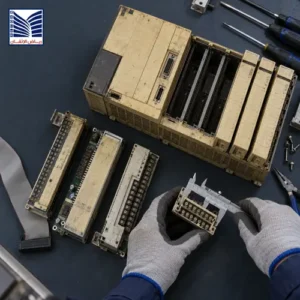
Engineering support can document the installed base, assess PLC obsolescence, compare migration options, review logic, identify compatibility issues, and organize a roadmap. It can also assist with I/O mapping, software conversion, networks, version control, testing, commissioning, and post-cutover troubleshooting.
A programmable logic controller PLC solutions resource is a relevant service destination for PLC assessment and lifecycle work. The scope, migration approach, test plan, and recommendation should follow the plant’s actual condition.
Frequently Asked Questions
What is a legacy PLC upgrade?
A legacy PLC upgrade is the assessment, modernization, migration, retrofit, or replacement of an outdated programmable controller and its related control-system interfaces. It may include hardware, software, I/O, networks, HMI/SCADA, documentation, testing, and commissioning. The objective is to reduce lifecycle and recovery risk while preserving required process behavior. The appropriate approach depends on support status, application criticality, compatibility, available outage time, and future requirements.
How do I know if my PLC is obsolete?
Check the manufacturer’s lifecycle status for the CPU, I/O, power supply, communication modules, firmware, programming software, and engineering tools. Then review spare availability, repair options, project recoverability, diagnostic capability, cybersecurity constraints, staff knowledge, and integration limitations. A PLC may still run while being operationally obsolete. Obsolescence is a risk assessment, not a decision based only on the controller’s installation date.
Should I replace or modernize an old PLC system?
Modernization is the broader decision; replacement is one possible part of it. A complete replacement may fit when the platform and tools are unsupported, while a partial migration or retrofit may fit when field wiring, panels, or selected interfaces remain suitable. Compare criticality, documentation, outage constraints, compatibility, future expansion, testing effort, and recovery requirements. Complete an engineering assessment before selecting an approach.
What are the risks of operating an outdated PLC?
Risks include unavailable spares, unsupported software, difficult troubleshooting, undocumented changes, weak diagnostics, integration limitations, cyber-maintenance constraints, longer recovery, and unplanned downtime exposure. The severity depends on the process and available mitigation. A documented backup, tested spare, maintenance plan, and staged roadmap may reduce immediate exposure, but these controls should be reviewed against the asset’s lifecycle and failure consequences.
How long does PLC modernization planning take?
Planning time depends on system size, number of controllers and I/O points, application complexity, documentation quality, integration scope, safety requirements, available archives, and the level of testing required. A small, well-documented retrofit may be scoped quickly, while a multi-area migration needs an installed-base audit, logic review, risk assessment, architecture design, test plan, and commissioning strategy. The schedule should be based on evidence rather than a generic duration.
Can an old PLC system be upgraded without replacing the entire control system?
Often, selected parts can be retained through a partial migration or retrofit, but the decision depends on compatibility and risk. Existing field wiring, instruments, panels, or machine interfaces may remain useful while the CPU, I/O, network, HMI, or software is modernized. Engineers must define the retained interfaces, conversion requirements, test coverage, temporary architecture, and rollback path before implementation.
Request a PLC Obsolescence Assessment and Modernization Roadmap
Request a PLC obsolescence assessment and modernization roadmap to evaluate PLC hardware, software, spares, compatibility, maintenance risk, migration options, testing, and commissioning requirements. A structured review can help decision-makers prioritize reliability improvements and choose between complete replacement, partial migration, retrofit, or staged risk reduction. Use the contact technical support page to discuss the evaluation scope.
A carefully planned legacy PLC upgrade treats modernization as a lifecycle and reliability decision, helping industrial teams reduce uncertainty before obsolete hardware or unsupported software becomes an urgent failure.