
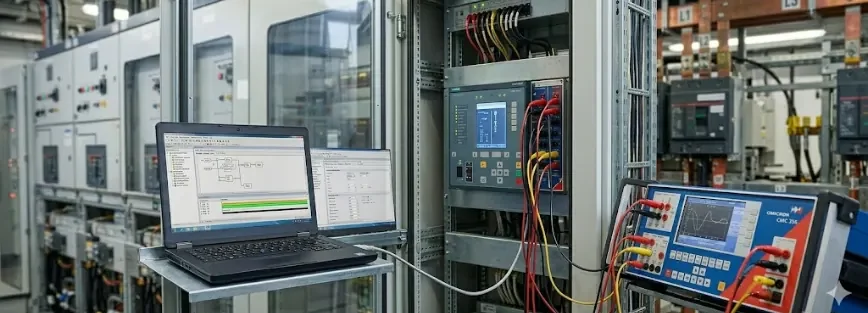
Even a minor mistake in protection relay configuration can cause false trips, missed fault detection, communication loss, or unnecessary downtime, making careful engineering review essential.Relay configuration plays a key role in detecting faults, communicating status, and ensuring safe operation. Modern digital relays also record events, integrate with SCADA and PLC systems, and support flexible logic within industrial automation systems.
Because of this complexity, settings must be accurate, documented, and carefully reviewed. This article covers configuration fundamentals, advanced settings, integration, cybersecurity, common problems, and the role of documentation and standardization.
What Is Protection Relay Configuration?
Protection relay configuration is the process of setting up a relay so it can perform the required protection, control, measurement, alarm, and communication functions for the electrical asset it protects. This usually includes defining pickup values, time delays, logic behavior, communication mapping, event recording preferences, and input/output assignments. Proper relay settings ensure the relay operates reliably and in alignment with the electrical system design.
A sound configuration process generally aims to ensure:
- The relay applies the correct protection functions for the protected equipment.
- Settings align with approved protection studies and coordination philosophy.
- Inputs, outputs, and logic paths match the actual field wiring and control sequence.
- Communication data points are correctly mapped for SCADA, PLC, or local HMI visibility.
- All settings are traceable to approved engineering documents and revision control.
Because a relay can influence breaker operation, alarms, and operator visibility, configuration should never be treated as a simple software exercise. It should be treated as an engineering task with operational consequences.
Read About: Types of Protection Relay in Power System
Structured Steps for Reliable Protection Relay Configuration
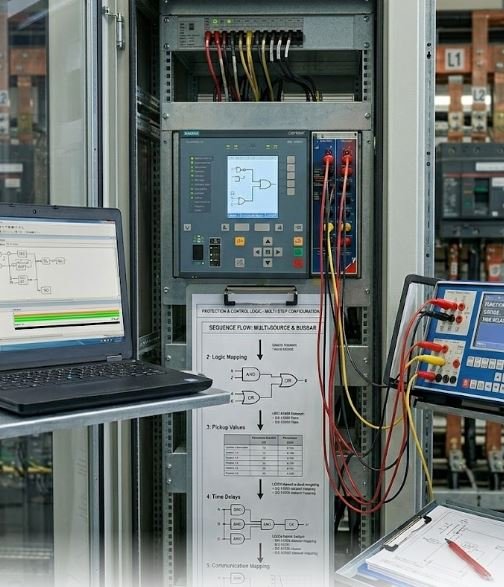
To ensure industrial power systems operate safely and reliably, following a structured workflow for relay configuration is critical. This workflow reduces errors, ensures consistent protection performance, and aligns relay behavior with approved engineering studies.
Practical Steps:
- Review the latest single-line diagram and protection philosophy.
- Identify the protection functions required for the asset.
- Apply pickup values based on approved protection coordination studies.
- Set time delays to ensure selectivity with upstream and downstream devices.
- Configure input/output mapping according to field wiring.
- Implement logic functions based on control and interlocking requirements.
- Assign communication points for SCADA and PLC systems.
- Validate settings through simulation or secondary injection testing.
- Document and store the final approved configuration file.
This structured approach ensures relay settings are reliable, traceable, and aligned with the real network, forming a bridge between engineering design and operational safety.
How to Configure Advanced Settings in Protection Relays
Digital and numerical relays can offer far more than basic overcurrent or voltage functions. They may include configurable logic, programmable I/O, event recording, multiple setting groups, communication profiles, and interlocking features. Proper digital relay configuration ensures these advanced functions are applied correctly and reliably.
Advanced relay settings may involve:
- Multiple setting groups for different operating conditions or network arrangements.
- Programmable logic for interlocks, alarm escalation, or conditional tripping behavior.
- Custom output mapping for breaker trip, lockout, indication, or annunciation functions.
- Disturbance record and event trigger configuration for post-fault analysis.
- Communication dataset configuration for SCADA, gateways, or remote engineering access.
These features can improve flexibility and visibility, but they also increase the importance of disciplined engineering review. Any advanced function should be configured only in line with the approved protection philosophy and control design.
How Protection Relays Integrate with SCADA and PLC Systems
Modern relay applications often require integration with SCADA, PLC, or broader automation systems. This integration helps operators monitor relay status, view alarms, capture events, and use relay data as part of the wider power and process supervision environment. Proper relay data integration ensures that communication points are mapped accurately and reliably.
Typical integration points include:
- Breaker status, trip indication, and protection pickup alarms sent to SCADA.
- Measurement values such as current, voltage, power, and frequency made visible to operators.
- Relay self-supervision and health alarms used for maintenance planning.
- Exchange of selected status or permissive signals with PLC-based control logic where approved.
- Time synchronization and event alignment for post-fault review across multiple systems.
The value of this integration depends on correct data mapping, clear authority boundaries, and documented communication settings. Without those controls, integration can create confusion instead of improving visibility.
Configuring Relays for Complex Industrial Networks
Industrial electrical networks can become complex when they include multiple substations, standby generation, ring arrangements, motor control interfaces, or plant-wide automation links. Proper complex relay configuration ensures that relay settings accurately reflect the actual network behavior and approved operating scenarios.
Configuration challenges in complex networks may include:
- Different fault levels under normal, standby, or emergency operating modes.
- Directional protection requirements where fault current can flow from more than one source.
- Coordination with upstream and downstream relays across several network zones.
- Changes in protection requirements after network expansion or major equipment replacement.
- The need to keep communication and alarm visibility consistent across different sites or substations.
For that reason, relay settings should be reviewed together with the latest single-line diagram, coordination study, and operational philosophy whenever a complex network changes
Adaptive and Programmable Relay Features
Some modern relays support adaptive or programmable behavior, such as switching between setting groups, applying logic based on breaker status, or tailoring outputs and alarms to the plant operating mode. These features can be helpful in industrial systems with changing power arrangements or specialized process needs.
| Function | Description |
|---|---|
| Automatic or operator-controlled change between setting groups | Switching between setting groups automatically or by operator control |
| Logic-based output control linked to breaker status, bus arrangements, or permissive conditions | Control of outputs based on breaker status or other permissive conditions |
| Custom alarm generation for maintenance, supervision, or sequence visibility | Generating custom alarms for maintenance or operational visibility |
| Programmable interlocking behavior for approved control schemes | Interlocking behavior programmed for approved control schemes |
These features should only be used when they are fully documented, validated, and controlled under an approved engineering process. A flexible relay is valuable only if the configuration remains understandable and maintainable.
Cybersecurity Considerations in Relay Configuration
Protection relay configuration is not only a protection engineering issue. It is also part of the asset’s cybersecurity and access-control posture. Digital relays may support remote engineering access, communication protocols, file handling, and event retrieval. That means configuration should be protected from uncontrolled edits or unauthorized access.
Practical cybersecurity considerations may include:
- Controlled user access for relay configuration and file export/import.
- Version control and retention of approved settings files.
- Documented approval before any communication or settings change is applied.
- Review of engineering laptop use, temporary connections, and remote access paths.
- Alignment with the site’s OT/ICS cybersecurity rules and change management process.
Cybersecurity controls should fit the owner’s policy and the criticality of the asset. The objective is to reduce unauthorized changes while keeping legitimate engineering work traceable and reviewable.
Common Issues in Relay Configuration
Most configuration problems appear after a setting change, a retrofit, or a gap between drawings and actual installation.
Protection relay configuration problems can lead to incorrect alarm behavior, failed communication, poor coordination, or unintended operation of breakers and control circuits. In many cases, the problem is not the relay hardware. It is the mismatch between configured logic and the actual system.
Common problems include:
- Settings that do not match the latest coordination study or protection philosophy.
- Incorrect input or output mapping compared with field wiring.
- Communication points incorrectly assigned or not aligned with SCADA/PLC expectations.
- Programmable logic changes applied without documentation or final validation.
- Configuration files not updated after retrofit, firmware change, or relay replacement.
The safest response is a structured review of settings files, drawings, event records, and maintenance history before any corrective change is made.
Read About: How to Fix Power Supply Relay Failure?
Configuration Documentation and Standardization
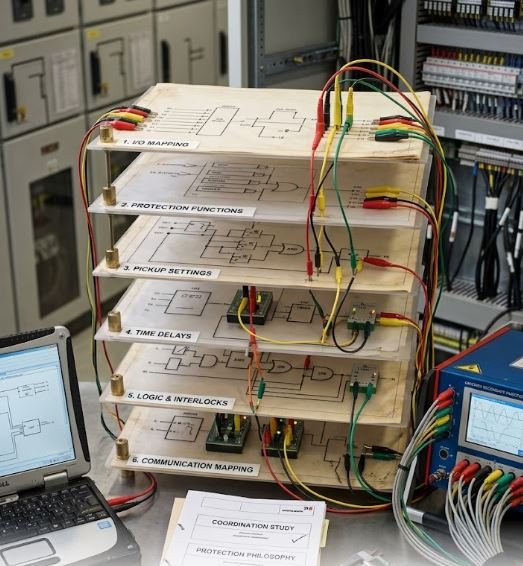
Documentation and standardization reduce long-term risk because they make relay settings easier to review and maintain. Relay configuration becomes more reliable when the engineering team uses standard templates, naming conventions, revision control, and documented testing records. Without those controls, even good settings can become difficult to maintain after staff changes, expansions, or emergency troubleshooting.
Useful documentation and standardization practices include:
- Approved relay settings templates and file naming conventions.
- Version-controlled settings files linked to the latest approved drawings.
- Documented logic descriptions for advanced and programmable functions.
- Standard test sheets for commissioning and periodic verification.
- Clear records of who changed what, when, and why.
Standardization does not remove engineering judgment, but it makes future review faster and more consistent across sites and projects.
Future Trends in Relay Configuration and Smart Protection Systems
Protection relay technology continues to evolve. Relay configuration is likely to become more connected, more data-rich, and more integrated with plant-wide automation and asset management systems.
Common future trends discussed in the sector include:
- Wider use of multifunction numerical relays with expanded logic and communication capability.
- Stronger integration with SCADA, power monitoring, and asset diagnostics platforms.
- Improved event analysis, disturbance recording, and remote engineering tools.
- More structured cybersecurity governance for connected protection assets.
- Greater use of standardized engineering templates and digital lifecycle records.
These trends can improve visibility and flexibility, but they also increase the need for disciplined configuration control and well-maintained documentation.
Ensure Reliable Industrial Power Systems with Riyadh Al-Itqan Company
Riyadh Al-Etqan Company ensures your industrial power systems run reliably through expert relay configuration, proper integration, clear documentation, and disciplined review.
Services include:
• Relay settings and logic review
• SCADA, PLC, and switchgear awareness
• Documentation and testing support
Get your system optimized and fault-ready—contact Riyadh Al-Itqan today.
Conclusion
protection relay configuration should be treated as a structured engineering activity rather than as a one-time software task. When relay settings, advanced functions, communication mapping, documentation, and testing are managed carefully, industrial power systems are better prepared to operate reliably and respond to faults with confidence.
To review our capability presentation and discuss your relay configuration requirements, view the company presentation and contact Riyadh Al-Itqan Company to book a discussion and request a quotation. View the presentation
FAQ
What role does SCADA/PLC integration play in relay configuration?
SCADA and PLC integration helps make relay status, alarms, measurements, and selected logic information visible to operators and maintenance teams. The value of that integration depends on correct data mapping, clear authority boundaries, and documented communication settings.
Can all types of protection relays be configured the same way?
No. Different relay types, protection functions, asset classes, and owner requirements can lead to different configuration approaches. Some basic principles remain common, but the final configuration must always match the relay design, the protected equipment, and the approved protection philosophy.
How often should relay configurations be reviewed or tested?
Review and testing frequency should match the owner’s maintenance policy, the criticality of the asset, and any system changes that affect settings or communications. Relays are commonly reviewed after commissioning, after modifications, and during scheduled maintenance intervals.