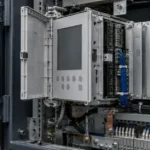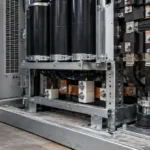
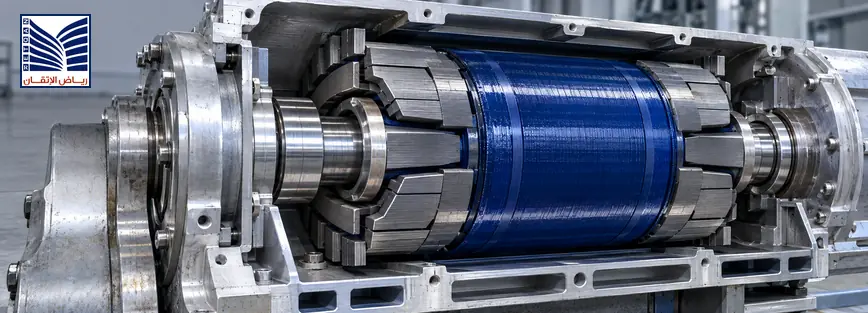
A Saudi-based power systems engineering provider should be able to supply, integrate, test, and commission AVR, synchronization, and load-sharing solutions for generator applications across Saudi Arabia. For buyers comparing an AVR excitation system supplier, the better choice is usually the one that can support system engineering, commissioning, settings review, documentation, and long-term serviceability, not only product delivery.
That matters because an excitation package is not just a regulator. In real projects, AVR behavior, synchronizing logic, breaker-close supervision, reactive power behavior, and generator protection all interact. A weak supplier may still provide the hardware, but a stronger supplier reduces project risk during startup, paralleling, and later maintenance.
Why buyer evaluation should focus on engineering, not price alone
In generator systems, commercial risk often appears after installation. It shows up when voltage build-up is unstable, synchronizing conditions are not proven, reactive sharing is poor, or the operating team lacks clear documentation for alarms, settings, and control modes.
That is why a serious buyer should compare:
- engineering depth
- commissioning scope
- documentation quality
- after-sales support
- protection and switchgear integration
- lifecycle support for the installed solution
These points matter more in practice than a basic product comparison.
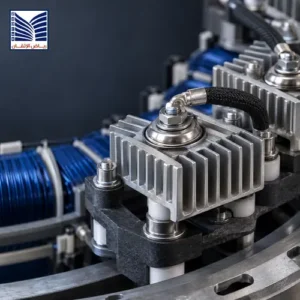
What a strong AVR excitation system supplier should actually provide
A strong supplier should support more than supply only. A useful project scope usually includes:
- AVR and excitation-system review
- synchronization logic and breaker-close supervision
- load sharing and reactive control setup
- testing and commissioning
- retrofit support for older generator systems
- documentation and as-left records
- technical support after energization
A good starting point is synchronization and AVR systems. If the supplier cannot explain how the AVR, synchronizer, and load-sharing behavior will be engineered and verified together, the project risk remains high even if the hardware is available.
What to check before requesting a quotation
Before asking for a quotation, the plant or EPC team should define the actual operating need.
1) Generator operating mode
The supplier should know whether the generator runs in island mode, parallel with other generators, parallel with utility, standby mode, or mixed operating modes. The required control strategy changes significantly depending on that answer.
2) AVR and excitation requirements
The supplier should review how voltage is controlled, how field current is managed, how reactive power or power factor is expected to behave, and whether the existing excitation arrangement is still suitable for the application.
3) Synchronization method
A proper quotation should define whether the project includes manual synchronizing support, automatic synchronizing logic, breaker-close supervision, dead-bus logic if relevant, and what electrical conditions must be met before closure.
4) Load-sharing objective
The supplier should clarify whether the project needs active-load sharing only, reactive-load sharing, constant power factor control, constant reactive power control, or a combination depending on the site operating philosophy.
5) Existing panel and interface condition
If the project is a retrofit, the supplier should review existing panel wiring, control signals, PT and CT interfaces, breaker controls, governor signals, exciter control path, and generator protection interfaces before promising a smooth upgrade.
Why commissioning scope should be a major buying criterion
An excitation or synchronization package is not proven when it powers up. It is proven when the generator builds voltage correctly, the synchronizer verifies the right conditions, the breaker closes under the right logic, and the machine shares load stably afterward.
A stronger supplier should therefore define a commissioning scope that includes:
- AVR response verification
- voltage build-up checks
- synchronizing logic checks
- breaker-close permissive checks
- governor and exciter correction-path checks
- load-sharing checks under practical operating conditions
- reactive-power or power-factor control verification
- final records of settings and as-left behavior
If these points are vague, the supplier may still install the package, but the plant will carry the real risk during startup.
Where the project also touches the trip path, generator protection logic, or breaker control, it makes sense to review protection relays alongside the AVR and synchronization scope.
Documentation quality is one of the clearest buying filters
A good supplier should hand over more than a working panel. The site should receive usable records for future troubleshooting, maintenance, and operator understanding.
That usually includes:
- final control philosophy and operating mode notes
- AVR settings and references
- synchronizing settings and permissive logic
- load-sharing and reactive-control settings
- signal mapping and interface notes
- commissioning and test records
- as-left configuration after startup
This matters because generator systems are often modified over time. If the plant later changes governor settings, breaker logic, or operating philosophy, the project becomes much easier to support when the original documentation is clear.
Protection and switchgear integration should be reviewed early
An excitation and synchronization package does not operate alone. It interacts with protection relays, breaker controls, switchgear logic, and often plant-level control systems.
That is why the supplier should be able to explain:
- how the synchronization and close logic interacts with protection trips
- how breaker status and permissives are handled
- how abnormal conditions are alarmed or blocked
- how the package fits the wider generator protection scheme
A useful supporting internal reference is protection relay configuration, especially if the project includes coordination between AVR, synchronizing logic, and protection settings.
What after-sales support should look like
After-sales support should be treated as a technical process, not a generic promise. The right supplier should be able to define how the site will be supported after startup if any of the following occur:
- unstable load sharing
- poor reactive sharing
- out-of-sync alarm conditions
- unexpected breaker-close blocking
- voltage instability
- operator uncertainty about control modes
- future retrofit or expansion needs
That support is especially important for plants running critical standby generation, continuous industrial generation, or utility-facing generator applications where downtime and misoperation have high consequences.
A practical buyer checklist for Saudi industrial teams
Before choosing an AVR excitation system supplier, project teams should confirm five things.
Engineering depth
Can the supplier explain how AVR control, synchronizing logic, and load sharing will work together in the actual operating mode?
Commissioning scope
Can the supplier define what will be tested, what will be witnessed, and what evidence will be handed over?
Documentation quality
Will the site receive useful settings records, signal maps, control notes, and as-left documents?
Retrofit capability
Can the supplier support older generator panels, existing control circuits, and brownfield modifications instead of only new supply?
After-sales support
Can the supplier help when the system needs tuning, troubleshooting, or operating-mode changes after handover?
This checklist is far more useful than comparing only panel appearance or controller model numbers.
FAQ
What should I compare first when choosing an AVR excitation system supplier?
Start with engineering depth, commissioning scope, documentation quality, retrofit capability, and after-sales support. These factors usually affect uptime more directly than price alone.
Why is commissioning scope so important?
Because excitation and synchronization systems only prove their value when voltage control, synchronizing checks, breaker closure, and post-close load sharing are verified under real operating conditions.
Should AVR, synchronizing, and load sharing be treated as one package?
In most generator applications, yes. They are functionally connected, and separating them too early often creates integration risk later.
Why should protection be reviewed together with AVR and synchronization?
Because breaker control, permissive logic, alarms, and abnormal-condition handling often depend on how the synchronization and protection systems interact. Treating them separately can create startup and operational risk.
If your project needs an AVR excitation system supplier for synchronization, load sharing, or voltage-control support, start with synchronization and AVR systems, align trip and breaker logic through protection relays, and use contact the engineering team to request a technical review and quotation.