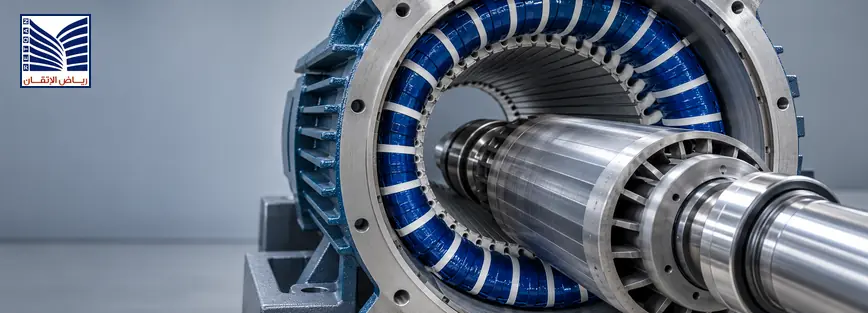
A Saudi-based rotating-equipment service provider supports motor assessment, rewinding, balancing, on-site testing, and maintenance for industrial facilities across Saudi Arabia. For plants evaluating motor rewinding and balancing Saudi Arabia services, the safest approach is to start with inspection, testing, and root-cause review before deciding whether the motor needs rewinding, balancing, overhaul, or full replacement.
That matters because motor failure rarely begins as a single clear event. It often develops through insulation deterioration, bearing wear, vibration, contamination, thermal stress, power-quality problems, or converter-related stress. A good service partner should be able to identify the real cause, define the correct repair scope, and document the final as-left condition so the site is not forced into repeat failures.
What to check before approving rewinding or balancing work
Before approving repair work, the plant should confirm whether the problem is really in the stator winding, the rotor, the bearings, the alignment, the load, or the motor-drive interaction.
A proper first review should usually cover:
- insulation condition and winding-to-ground condition
- bearing condition and vibration behavior
- overheating evidence and cooling-path condition
- contamination, dust, and moisture exposure
- operating history and recent trip behavior
- whether the motor is direct-on-line or converter-fed
This matters because rewinding is not always the correct first answer. In some cases, balancing, bearing work, cleaning, or drive-side troubleshooting may be more urgent than winding repair.
For broader service scope, a useful starting point is industrial electric motors.
Common issues that usually lead to rewinding and balancing work
Winding insulation deterioration
One of the clearest triggers for rewinding assessment is insulation decline. If trending shows a gradual drop or repeated electrical stress, the motor may move from maintenance into repair planning. Rewinding decisions should be based on testing and condition evidence, not only on whether the motor has tripped.
Bearing wear and vibration
Balancing and rewinding are often discussed together because vibration-related problems can overlap with wider motor deterioration. If a site sees persistent vibration, abnormal noise, or repeated bearing damage, the repair scope should not stop at electrical checks alone.
Repeated overheating
A motor that runs hot repeatedly should not be treated as a one-time event. Overheating may indicate insulation stress, cooling restriction, overload, harmonic effects, mechanical drag, or bearing-related problems. A good service provider should define what is causing the heat before recommending the final repair path.
Drive-fed motor stress
Where the motor runs on a VFD, repeated trips or unusual winding stress may point to motor-drive interaction rather than a winding-only problem. In those cases, the plant should review the wider system rather than treating the motor as an isolated component.
Useful related references for those situations include variable frequency drives and VSDs, how to select a VFD for a motor, and what causes a VFD to trip.
When rewinding should be considered
Rewinding should be considered when inspection and testing show that the winding system is genuinely compromised and the motor remains a suitable candidate for return to service. It should not be treated as the default answer to every trip or hot-running motor.
A proper rewinding decision should answer questions like:
- Is the stator actually the failed element?
- Are bearings, rotor condition, or mechanical issues also involved?
- Is the motor economically and technically suitable for rewind?
- Will the motor return to a drive-fed duty that needs wider review?
- What tests will be documented before and after repair?
This is where a structured repair approach matters more than workshop speed alone.
When balancing should be included
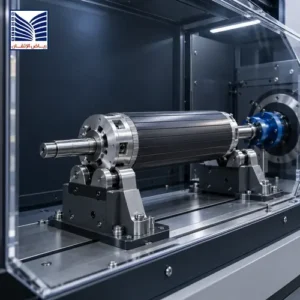
Balancing should be included when the service evidence shows that vibration, rotor-related issues, or mechanical imbalance are part of the problem. In practice, balancing is often critical when:
- vibration has been persistent or increasing
- bearings have failed more than once
- the motor has been overhauled or rewound and needs full return-to-service verification
- the machine operates at high speed or high consequence
- the motor has shown unstable mechanical behavior after repair
A strong service provider should be able to explain why balancing is being recommended and how it fits the total repair scope rather than presenting it as an isolated extra step.
Why documentation quality matters after repair
A good repair should leave the site with more than a working motor. It should leave a usable engineering and maintenance record.
That usually includes:
- inspection findings
- test results before repair
- the defined repair scope
- rewinding or balancing notes
- post-repair verification results
- final as-left condition records
This matters because future failures are easier to diagnose when the original repair work was documented clearly. A site with poor repair records often loses time during the next outage simply rediscovering what was done before.
Risk indicators that mean it is time to bring in a specialist team
A plant should stop treating the issue as routine and escalate to a specialist team when one or more of these signs appear:
- insulation values are deteriorating across time
- repeated overheating continues after ordinary maintenance
- vibration remains after bearing replacement or normal repair
- the motor is critical to production or utilities
- the machine is MV or otherwise high consequence
- the motor runs through a VFD and repeated trips remain unexplained
- previous repairs did not solve the root cause
- the site lacks clear repair history or as-left documentation
In those situations, the job has moved beyond routine maintenance and should be handled as a specialist diagnostic and repair task.
Relevant broader service references include motor maintenance services in Riyadh, MV motor guidance, and VFD preventive maintenance checklist.
How to compare service providers
When comparing service providers, do not compare only turnaround claims. Compare the technical process.
A stronger comparison checklist looks like this:
Engineering depth
Can the provider explain failure modes, testing methods, and repair triggers clearly?
Scope clarity
Does the provider define when rewinding, balancing, overhaul, or replacement is appropriate?
Testing discipline
Will the site receive meaningful pre-repair and post-repair verification?
Documentation quality
Will the site receive useful records and as-left notes after the job is complete?
System awareness
Can the provider review motor-drive interaction where the motor is converter-fed?
After-sales support
Can the provider help if the problem returns or if the machine needs further analysis after startup?
This method is usually much more useful than comparing service providers by price or workshop claims alone.
FAQ
What should be checked first before motor rewinding and balancing work?
Start with insulation condition, bearing condition, vibration behavior, overheating evidence, contamination, and operating history before deciding on the final repair scope.
Is rewinding always the right answer when a motor trips?
No. A trip may be caused by winding deterioration, but it can also come from bearings, mechanical stress, contamination, power-quality issues, or motor-drive interaction.
When should balancing be included?
Balancing should be included when vibration, rotor-related issues, repeated bearing failures, or post-repair mechanical stability are part of the problem.
When should a plant bring in a specialist team?
A specialist team is usually needed when the motor is critical, the root cause is unclear, previous repairs failed, vibration persists, insulation continues to decline, or the motor is part of a converter-fed system.
If your facility needs motor rewinding and balancing Saudi Arabia support for assessment, repair, or long-term maintenance planning, start with industrial electric motors, review converter-fed applications through variable frequency drives and VSDs, and use contact the service team to book a motor assessment and request a quotation.