

A Saudi-based protection engineering provider supplies, tests, retrofits, and commissions ABB protection relay supplier for industrial and utility projects across Saudi Arabia. For plants already aligned to this platform, the best supplier is usually the one that can prove compatibility, engineering depth, lifecycle awareness, commissioning discipline, and long-term support rather than simply offering the lowest quotation.
That matters because a brand-specific relay project is not just a hardware decision. It is also a settings, engineering, communications, testing, and lifecycle decision. A weak supplier may still deliver the relay, but a stronger supplier reduces risk during retrofit, energization, and post-startup maintenance.
Why a brand-specific buying process matters
When a plant already uses ABB-based protection, the supplier should be evaluated on more than product availability. The real questions are:
- Will the new relay fit the existing protection scheme?
- Can the supplier support the existing engineering workflow?
- Can the supplier handle IEC 61850 or panel-level integration correctly?
- Is the selected relay family still the right lifecycle fit?
- Can the supplier support testing, retrofit, and future maintenance?
Those questions matter more than a simple brand match because two relays from the same brand can still create project risk if the engineering and lifecycle fit are poor.
What a strong ABB protection relay supplier should actually provide
A strong supplier should support more than the device itself. A useful project scope usually includes:
- relay selection and application review
- settings development or settings verification
- testing and commissioning
- retrofit support for older relays
- protection coordination support
- panel interface review
- documentation and as-left records
- post-startup troubleshooting support
A good starting point is protection relays. If the supplier cannot explain how the relay will be configured, tested, and handed over, the project risk remains high even if the hardware is available.

What to check before requesting a quotation
1) Relay family compatibility
The supplier should first confirm whether the project is staying within the same relay family, moving to another product line in the same ecosystem, or bridging between active and older installed devices. This matters because plants that are already standardized on ABB protection usually want to preserve logic philosophy, operator familiarity, engineering workflow, and spare-part planning.
2) Engineering-tool compatibility
A brand-led relay project should include the engineering environment, not just the relay catalog. If the site uses an established relay engineering workflow, the supplier should be able to support file handling, settings review, communication engineering, and documentation updates without creating unnecessary rework.
3) IEC 61850 and communication fit
Where digital substation functions or networked IED communication are involved, the supplier should review communication requirements early. That includes configuration files, engineering exchange, and how the relay will connect to the wider control and protection environment.
4) Lifecycle and spare availability
The supplier should clearly explain whether the selected relay is in a strong lifecycle position and whether it fits the plant’s long-term spare strategy. A plant with older installed relays may not want a quick one-off replacement if that creates a more difficult support position later.
5) Existing panel and scheme condition
In brownfield projects, the panel matters as much as the relay. The supplier should review current panel space, CT and VT wiring, trip outputs, test switches, terminal arrangement, and breaker interface before promising a smooth retrofit.
Why lifecycle fit and spare strategy matter
Lifecycle fit is one of the most important buying criteria in brand-specific relay projects. A plant already aligned to ABB protection usually wants predictability, not just immediate delivery. That means the supplier should be able to explain:
- whether the selected relay family is active and supportable
- how spare planning should be handled
- whether the project is a one-for-one retrofit or the start of a wider migration
- how the site can avoid future support gaps
This is where a supplier adds real value. A strong supplier helps the plant choose a relay path that remains maintainable after the first commissioning window.
Commissioning scope should be a major buying criterion
A relay project is not complete when the relay powers up. It is complete when settings, I/O mapping, communication behavior, logic, and trip paths have been proven in service conditions.
A stronger supplier should define a commissioning scope that includes:
- settings verification
- binary input and output checks
- CT and VT verification
- communication checks where applicable
- logic and alarm verification
- trip-path checks
- test records and final as-left documentation
If these items are vague, the supplier may still install the relay, but the risk will return during energization or the first actual fault.
For practical preparation, it is also useful to review protection relay configuration before cutover, especially in settings-heavy or retrofit-heavy projects.
Why retrofit capability matters in ABB-based projects
Many Saudi projects are not greenfield. They are replacement, migration, or partial upgrade projects inside live substations and industrial switchgear. In those cases, the supplier should support more than new relay supply.
A practical retrofit scope may include:
- review of the existing protection scheme
- mapping old logic to the replacement relay
- panel modification and terminal reassignment
- documentation recovery where records are incomplete
- test and commissioning support after retrofit
- final as-left records for future maintenance
This is where relay retrofit services Saudi Arabia becomes a technical requirement, not just a search phrase. A supplier with weak retrofit experience can create more outage risk than a plant expects.
Where the relay is tied closely to feeder or breaker control, it also makes sense to review LV & MV switchgear solutions alongside the protection scope.
Documentation quality is one of the clearest buying filters
A good supplier should leave behind more than a working relay. The site should receive usable engineering records for future troubleshooting and maintenance.
That usually includes:
- final settings files
- logic or configuration notes
- I/O mapping references
- communication notes where relevant
- commissioning and test records
- retrofit notes if changes were made to the panel or scheme
- final as-left documentation
Without that documentation, even a technically correct project can become difficult to support later.
A useful internal supporting reference here is types of protection relay in power system, especially when the plant is comparing relay roles across feeder, transformer, motor, and generator applications.
After-sales support should be treated as a technical service
After-sales support in protection projects is not only about warranty. It is about settings review, fault support, retrofit follow-up, and future migration planning.
A strong supplier should be able to explain:
- how post-startup faults will be handled
- whether settings review support is available
- how future modifications are documented
- how lifecycle planning is handled for older installed relays
- whether testing and coordination support remain available after commissioning
This is one reason a plant should evaluate an IED protection relay supplier KSA or protection relay testing company Saudi Arabia on engineering process and support structure, not only on product access.
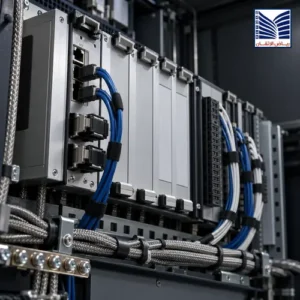
A practical buyer checklist for Saudi industrial teams
Before choosing an ABB protection relay supplier, project teams should confirm five things.
Compatibility
Can the supplier prove that the selected relay fits the installed protection philosophy, engineering workflow, and panel environment?
Engineering depth
Can the supplier support settings, logic, communication engineering, and scheme review instead of only hardware delivery?
Lifecycle fit
Can the supplier explain spare planning, lifecycle position, and long-term supportability clearly?
Commissioning scope
Can the supplier define what will be tested, verified, and documented before handover?
Retrofit capability
Can the supplier handle older panels, brownfield modifications, and incomplete documentation without increasing outage risk?
That is the comparison method that usually produces better results than comparing catalog lines or prices alone.
FAQ
What should I compare first when choosing an ABB protection relay supplier?
Start with compatibility, engineering depth, lifecycle fit, commissioning scope, and retrofit capability. Those factors usually affect reliability and maintainability more directly than price alone.
Why does lifecycle fit matter so much?
Because brand-specific relay projects often depend on long-term spare planning, consistent engineering workflow, and support continuity. A relay that solves today’s outage but creates future support problems is rarely the best choice.
Why should commissioning scope be reviewed before award?
Because a relay is only proven after its settings, logic, I/O, communication behavior, and trip paths have been checked properly. Power-up alone is not proof of readiness.
When does a replacement job become a retrofit project?
It becomes a retrofit project when the work affects panel wiring, test switches, trip circuits, communication mapping, or documentation recovery. In those cases, the supplier needs a structured retrofit method, not just a replacement device.
If your project needs an ABB protection relay supplier for supply, testing, retrofit, or coordination support, start with protection relays, review related feeder and breaker scope through LV & MV switchgear solutions, and use contact the protection team to request a relay review and quotation.