

Protection relay event record analysis helps engineers investigate an unexpected electrical trip by reviewing recorded indications, timestamps, measured quantities, and associated equipment status. The objective is to reconstruct what the available evidence shows, determine how the relay responded, and identify which questions still require investigation. After a trip, preserving the available records and comparing them with circuit breaker indications, SCADA alarms, and approved protection documentation can prevent premature conclusions. However, an event record does not automatically establish the physical root cause. Its interpretation depends on the relay model, recording configuration, available signals, time synchronization, and quality of the supporting evidence.
Quick Answer: How Should You Review a Protection Relay Event Record?
Start by preserving available records through approved site procedures, then identify the record type, establish the event chronology, review protection indications and recorded electrical quantities, and correlate the findings with breaker and SCADA information. Compare the evidence with the applicable OEM documentation and approved protection settings and logic. Record uncertainties and missing information before deciding whether further investigation is necessary. The correct interpretation depends on the device, configuration, recording characteristics, and quality of the available evidence.
- Preserve: Save available event logs, disturbance records, and relevant system records.
- Identify: Confirm the relay model, record type, timestamps, and available signals.
- Review: Examine protection indications and recorded current or voltage quantities.
- Correlate: Compare relay information with breaker status and SCADA alarms.
- Verify: Check the applicable OEM manual, approved settings, and protection logic.
- Document: Separate recorded facts from interpretations and unresolved hypotheses.
- Escalate: Seek a protection engineering review when the evidence remains inconsistent or the trip is repeated or unexplained.
Safety, equipment protection, and approved operational recovery procedures take precedence over evidence collection. Do not delay an essential safety action to preserve a record.
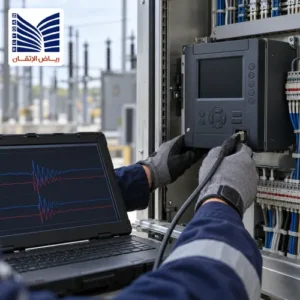
What Is a Protection Relay Event Record?
A protection relay event record is information stored or generated by a protective device in connection with selected events, status changes, protection operations, or other configured recording conditions. Digital protection relays may provide several forms of information that help engineers understand how the device responded to an abnormal electrical condition.
Depending on the relay manufacturer, model, firmware, and configuration, available information may include:
- Event timestamps and sequence-of-events information.
- Protection element pickup, operation, or trip indications.
- Measured current and voltage values.
- Binary input and output status.
- Trip command or trip-related logic indications.
- Monitored circuit breaker auxiliary contact status.
- Disturbance waveforms or sampled electrical measurements.
- Device diagnostics, self-supervision indications, and communication records.
Not every relay provides every record type or signal. Recording triggers, event names, channel availability, memory capacity, and export formats can also vary. Before interpreting a protection relay trip log, engineers should identify the actual record format and consult the documentation for the installed device.
Event Log vs. Disturbance Record vs. Oscillography
These terms describe related but different forms of evidence. Their precise meanings and file formats can vary by manufacturer.
- Event log: A chronological record of selected internal events, status changes, protection indications, or configured signals. Its level of detail depends on the device.
- Disturbance record: A record associated with a disturbance that may contain sampled electrical quantities and digital indications over a defined recording interval.
- Oscillography: Waveform-based information used to examine changes in recorded electrical quantities over time.
A disturbance record may contain oscillographic data, but the terms are not interchangeable in every relay platform. An event log is not necessarily a waveform record, and a waveform record may cover only a limited interval around its trigger.
Engineers should also distinguish a relay’s event summary from the underlying record. A summary may identify an event or protection indication, while a detailed disturbance file may provide additional information about the measured quantities and their changes during the captured interval.
Where a relay exports COMTRADE files, the format supports the exchange of transient power-system data. IEC 60255-24:2013 specifies a common format for exchanging transient waveform and event data from power systems and power-system models. The applicable file structure and supported data types should be checked against the standard and the relay manufacturer’s documentation.
What Should Engineers Do Before Interpreting the Record?
Preserve the Original Records
Where safe, authorized, and consistent with site procedures, preserve the available event logs, disturbance files, relay reports, timestamps, and relevant SCADA or operational records before nonessential actions alter the evidence.
Where supported, retain the original exported files and relevant metadata. Record the device identity, export time, source of the file, and any known limitations. If a working copy is needed for analysis, retain the original separately in accordance with the site’s document-control and evidence-handling requirements.
Uncontrolled clearing, deletion, configuration changes, or unnecessary resets may remove useful context or complicate later analysis. However, preserving records must never override essential safety measures, approved isolation procedures, or authorized operational recovery. Do not access a relay, operate controls, or change a protection configuration without the required authorization.
Record the Operational Context
A relay record is more useful when reviewed alongside information about the plant and the conditions surrounding the trip. Where available and authorized, collect:
- The approximate event date and time.
- The affected feeder, transformer, motor, or other equipment.
- The operating condition before the event.
- Related alarms or abnormal indications.
- Available circuit breaker status information.
- Relevant maintenance or approved configuration changes.
- Associated SCADA or HMI alarms.
- Operator observations documented at the time.
These details help establish context, but an operator observation or SCADA alarm should still be treated as a separate piece of evidence. Its meaning and reliability must be assessed alongside the other records.
Identify the Relay and Record Configuration
Before interpreting a signal, establish the relay manufacturer, model, firmware where relevant, record type, available channels, and applicable protection configuration. Identify the signal names and event definitions using the relevant OEM manual.
A label such as a protection element target or trip output may have a specific meaning in one relay platform that differs from another. Engineers should not assume that similar names represent identical logic or recording behavior across different devices.
How to Reconstruct the Event Sequence
A useful fault event analysis begins with chronology rather than an assumption about the cause. The reviewer should establish what was recorded, when it was recorded, and how the available indications relate to one another.
Establish the Recorded Timestamps
Identify the timestamps in the relay event log and any associated disturbance, breaker, or supervisory-system records. Before comparing them, check:
- The timestamp format and time zone, where applicable.
- The relay clock’s synchronization status.
- The synchronization method and status of other devices.
- The time resolution and timestamp characteristics of each record.
- Whether the records relate to the same physical event.
- Any known clock offsets, recording delays, or communication delays.
Two records displaying different times do not necessarily indicate that the underlying events occurred in that order. Differences may reflect clock offsets, timestamp resolution, processing behavior, or communication and recording delays. Conversely, identical displayed timestamps do not prove that two events occurred simultaneously.
Where precise sequencing matters, document the synchronization limitations and avoid claiming a definite order if the available time information cannot support it.
Arrange the Relevant Indications Chronologically
Once the records have been identified, organize the relevant indications into a timeline. Depending on the signals actually available, entries may include:
- A recorded change in current or voltage.
- A protection element pickup or operation indication.
- A relay trip output indication.
- A monitored circuit breaker status change.
- An associated SCADA alarm.
- A subsequent protection or equipment indication.
This is an evidence framework, not a universal operating sequence. The order in which indications appear depends on the protection function, configured logic, recording resolution, signal definitions, and device behavior. The reviewer should not assume that every relay records every stage or that the first displayed indication identifies the physical cause.
Use an Evidence Timeline to Separate Facts from Assumptions
| Recorded evidence | What it may help establish | What it does not prove by itself |
|---|---|---|
| Protection element indication | Which configured element reported pickup or operation. | The complete physical root cause of the trip. |
| Relay trip output indication | Whether a configured trip-related output or logic state was recorded. | Whether the circuit breaker physically interrupted the current. |
| Breaker auxiliary contact change | That a monitored breaker position indication changed. | That every breaker pole interrupted correctly. |
| Disturbance waveform | How recorded electrical quantities changed during the captured interval. | What happened outside the recording window or what caused every observed change. |
| SCADA alarm | What the supervisory system reported for a configured signal. | That the timestamp, label, or mapped indication perfectly matches the relay record. |
Use this table as a starting point, then interpret each item using the actual signal definitions, device configuration, record quality, and corroborating evidence. Where records conflict, document the discrepancy instead of choosing the explanation that appears most likely without verification.
How to Interpret Protection Targets and Measured Quantities
Review the Protection Targets
Protection targets or operation indications may identify which configured protection element reported a pickup, operation, or trip-related event. Their precise meaning depends on the relay design and logic configuration.
For example, an overcurrent-related target can help identify which configured protection function reported an operation. However, the target name alone does not confirm the physical origin of the abnormal condition, the fault location, or the complete sequence of events.
Check the applicable relay manual, approved settings, logic diagrams, and event definitions before deciding what a target establishes. Where several indications are present, interpret them collectively rather than treating one target as a complete diagnosis.
Review Recorded Current and Voltage Quantities
Available measurements and relay oscillography can help engineers examine the electrical conditions observed by the device. Depending on the record, relevant information may include phase currents, residual or other configured current quantities, phase voltages, and digital status channels.
Before drawing conclusions, consider:
- Which phases and analog channels were recorded.
- Whether the record includes a useful pre-event interval and the relevant post-event interval.
- The recording resolution and measurement characteristics.
- The relationship between the measured quantities and the protection element involved.
- Whether the relevant channel definitions and scaling information are available.
- Whether independent records support the proposed interpretation.
A record may begin after the initial abnormal condition, end before the equipment response is complete, or omit a signal needed to understand the event. Such limitations should be documented. Do not invent missing values or infer an unrecorded waveform from a protection target alone.
Distinguish Pickup, Operation, and Trip Indications
Pickup, operation, and trip-related indications can represent different stages of a protection function or output logic. Their exact meaning depends on the device, configured function, and event definitions.
An indication that a protection element picked up does not necessarily mean that the relay issued a trip command. Likewise, a recorded trip-related output does not independently establish that the circuit breaker successfully interrupted the current.
Use the relay’s approved logic configuration and documentation to establish the meaning of each indication. Avoid imposing a single universal sequence on all protection functions or changing settings based on an isolated event record.
How to Correlate Relay Records with Circuit Breaker and SCADA Indications
Circuit Breaker Status and Trip Circuit Indications
Correlating relay information with circuit breaker evidence helps engineers distinguish a protection decision from the subsequent equipment response. Where available, review the recorded trip output, breaker auxiliary contacts, relevant trip circuit indications, and associated equipment records.
A relay trip command and confirmation of physical current interruption are different pieces of evidence. An auxiliary contact may indicate a change in breaker position, but it does not independently prove that all poles interrupted correctly or establish the mechanical and electrical condition of the breaker.
If the relay record indicates a trip-related output but the available breaker status information appears inconsistent, document the discrepancy and determine what further evidence is needed. The appropriate investigation may depend on the breaker design, monitored signals, and approved maintenance procedures.
For related equipment context, consult R-Aletqan’s LV/MV switchgear systems page. The presence of relevant equipment on a product page does not, by itself, establish the cause of a particular trip.
SCADA and HMI Event Records
SCADA and HMI records can provide additional context about the event, including supervisory alarms, monitored status points, communication status, and operator-visible indications. They can be particularly useful when the relay event must be compared with a wider plant operating sequence.
Review the following where applicable:
- Alarm timestamps and available sequence-of-events information.
- Tag descriptions and signal mapping.
- Communication or device-quality indications.
- Time synchronization information.
- The relationship between relay signals and supervisory-system records.
- Known differences in timestamping or event recording behavior.
Communication delays, incorrect signal mapping, incomplete signal coverage, or unsynchronized clocks can complicate the comparison. A missing SCADA alarm does not prove that the underlying event did not occur; the signal may not have been configured, transmitted, or recorded as expected.
R-Aletqan’s SCADA and HMI monitoring systems page describes industrial monitoring and integration solutions relevant to supervisory-system context. Specific event-record diagnostic capabilities should be confirmed separately where required.
Compare the Evidence with Approved Protection Settings and Logic
Verify the Approved Reference Documents
Recorded behavior should be compared with the approved protection scheme and the documentation applicable to the installation. Depending on the project, useful references may include:
- Approved relay settings files or settings sheets.
- The protection coordination study.
- Protection logic diagrams.
- The approved trip matrix or cause-and-effect documentation.
- Relevant electrical single-line diagrams.
- Circuit breaker documentation.
- Commissioning and functional test records.
- The applicable relay OEM manual.
- Authorized configuration and change records.
Not every installation has the same document set. The reviewer should identify the actual approved engineering package and establish whether the available documents apply to the device and configuration present at the time of the event.
Distinguish Approved Settings from Current Device Settings
The approved settings and logic establish the intended protection arrangement. The configuration active in the relay at the time of the trip is a separate matter that should be verified where records are available.
Review authorized configuration records and change history to determine whether the applicable settings version can be established. If the active configuration cannot be verified, document that limitation rather than assuming that the latest settings sheet accurately represents the device at the time of the event.
Do not change pickup values, time delays, trip logic, or other protection parameters based on a single record without an appropriate engineering assessment and authorization. Any change must follow the site’s protection engineering, approval, and management-of-change processes.
Identify What the Evidence Supports—and What Remains Uncertain
A defensible investigation separates four categories:
- Recorded facts: Information directly supported by the available logs, waveforms, or verified system records.
- Engineering interpretation: An explanation consistent with the recorded facts and applicable device documentation.
- Unverified hypotheses: Possible explanations that require further evidence or testing.
- Information gaps: Missing, contradictory, unsynchronized, or otherwise unreliable evidence.
This separation prevents an early assumption from becoming an unsupported root-cause statement. The conclusion should reflect the strength and limitations of the evidence, including any alternative explanations that remain plausible.
Common Mistakes When Reading Protection Relay Event Records
- Clearing records before preserving evidence: Useful context may be lost. Preserve available records where safe and practicable, without delaying required safety or recovery actions.
- Treating every record as a waveform: An event log may contain status changes without sampled analog data. Identify the actual record type before interpreting it.
- Assuming the first displayed indication is the root cause: Display order may not establish physical causality. Reconstruct the chronology using verified timestamps and signal definitions.
- Comparing timestamps without checking synchronization: Clock offsets and recording behavior may distort the apparent sequence. Document synchronization status and uncertainty.
- Assuming a trip output proves successful interruption: A command and a physical breaker response are different events. Correlate the record with appropriate breaker evidence.
- Interpreting target names without OEM documentation: Labels and logic can differ between models. Verify the signal’s meaning against the applicable manual and configuration.
- Using unverified settings as the reference: A settings sheet may not represent the active configuration. Check approved records and available configuration history.
- Ignoring SCADA and breaker evidence: Relevant records may clarify the chronology or reveal inconsistencies. Correlate sources where available and authorized.
- Treating missing signals as proof of no event: The signal may not have been recorded or mapped. Identify the limits of the available channels and data.
- Changing protection settings too early: An isolated record may not support a settings change. Complete the required engineering assessment and approval process first.
- Declaring root cause without corroboration: A protection target may identify a reported operation without proving the physical cause. State the conclusion at the level supported by the evidence.
- Using a generic workflow instead of the actual relay manual: Recording and logic behavior vary. Apply the relevant OEM documentation and approved protection scheme.
When Is Further Protection Engineering Investigation Needed?
A basic record review may be insufficient when the available evidence is incomplete, contradictory, or inconsistent with the expected protection behavior. Further investigation may be warranted when there are:
- Repeated or unexplained trips.
- Inconsistent relay and breaker indications.
- Missing or contradictory event records.
- Uncertain time synchronization that prevents reliable sequencing.
- Unexpected protection element operation.
- Possible differences between approved and active settings.
- Evidence suggesting a breaker or trip circuit issue.
- Incomplete disturbance records.
- Unclear coordination between protection devices.
- Significant operational or equipment consequences.
Depending on the findings, the next step may involve review by a qualified protection engineer, examination of the complete protection scheme, additional approved testing, review of breaker-related evidence, or a dedicated protection coordination assessment.
Not every unexpected trip requires every form of testing or analysis. The next step should address the unresolved engineering question and follow approved site procedures. Do not bypass protective functions, disable trips, perform unauthorized live testing, or modify settings as a substitute for investigation.
How Protection Relay Engineering Support Can Help
Appropriate protection engineering support can help organize the available evidence, interpret device-specific indications, compare observed behavior with approved settings and logic, and identify what remains uncertain.
Depending on the confirmed scope, a technical review may involve:
- Reviewing available relay event logs and disturbance records.
- Establishing a defensible event chronology.
- Interpreting recorded indications using the applicable OEM documentation.
- Comparing observations with approved protection settings and logic.
- Reviewing relevant breaker and SCADA indications.
- Identifying missing information and competing hypotheses.
- Determining whether further testing or a broader protection study is warranted.
- Documenting findings, limitations, and recommended next steps.
R-Aletqan’s published protection relay services include protection coordination studies, programming and reprogramming, calibration, testing, commissioning, replacement, and upgrades. The specific scope of any diagnostic review should be confirmed with the provider rather than assumed from the general service description.
Request a Technical Review of an Unexplained Relay Trip
If repeated or unexplained relay trips remain unresolved, an initial technical enquiry can help identify the records and engineering documents needed for further investigation.
Where available and appropriate to share, useful initial information may include:
- Relay manufacturer and model.
- A general description of the affected equipment or circuit.
- The event date and approximate time.
- Available event logs and disturbance records.
- Relevant breaker and SCADA indications.
- Approved settings references, where appropriate and authorized.
- A concise description of the unresolved engineering question.
Do not send credentials, sensitive network configurations, or security-sensitive plant information through unapproved channels. Share technical files only through authorized processes and in accordance with the site’s information-security requirements.
To discuss an unexplained trip and the appropriate next engineering step, review the protection relay services page or contact the R-Aletqan team.

Frequently Asked Questions
1. What Is a Protection Relay Event Record?
A protection relay event record is information stored or generated by a relay in response to configured events, status changes, protection indications, or recording triggers. Depending on the device, it may contain timestamps, protection targets, measured quantities, binary signals, or links to disturbance data. The exact contents vary by manufacturer, model, firmware, and configuration. An event record provides evidence of what the device recorded, but it does not necessarily establish the physical root cause of a trip.
2. What Is the Difference Between a Relay Event Log and a Disturbance Record?
An event log generally presents selected events or status changes in chronological form. A disturbance record may contain sampled electrical quantities and digital indications over a defined interval, while oscillography refers to waveform-based information. The terms and formats vary by manufacturer, and a disturbance record may include oscillographic data. Engineers should confirm which information is actually available in the installed relay rather than assume every event log contains waveform data.
3. What Should Engineers Check First After an Unexpected Relay Trip?
Follow the approved site procedures and address immediate safety and operational requirements first. Where safe and authorized, preserve the available event logs, disturbance files, and relevant system records before nonessential actions alter the evidence. Identify the relay model and record types, document the operational context, check timestamp reliability, and begin correlating protection indications with breaker and SCADA information. Do not change protection settings or declare a root cause solely from the first displayed indication.
4. Can a Protection Relay Event Record Identify the Root Cause of a Trip?
A record can help establish what the relay detected, calculated, or reported and may strongly support an engineering explanation. However, it does not always establish the complete physical cause. Missing channels, limited recording windows, synchronization issues, configuration uncertainty, and the absence of corroborating breaker or system evidence can restrict the conclusion. Engineers should distinguish confirmed facts from interpretations and hypotheses, then obtain further evidence where necessary.
5. Why Should Relay Records Be Correlated with Circuit Breaker Status?
A relay trip command and successful circuit breaker interruption are separate events. Relay records can show a trip-related output, while monitored auxiliary contacts and other breaker information may help establish the recorded equipment response. Auxiliary contacts alone do not prove that every pole interrupted correctly. If the available indications conflict, the discrepancy should be documented and assessed using the appropriate breaker records, device documentation, and approved engineering procedures.
6. What Is COMTRADE in Protection Relay Disturbance Analysis?
COMTRADE is a standardized format for exchanging transient power-system data, including waveform and event information. IEC 60255-24:2013 specifies a common format for transient data from power systems and power-system models. Whether a particular relay supports COMTRADE, which data it exports, and which file variants are available depend on the device and its configuration. Engineers should verify compatibility and file interpretation using the applicable standard and OEM documentation.
7. Why Are Timestamps and Time Synchronization Important During Event Analysis?
Timestamps help engineers reconstruct the event sequence, but records from different devices may use unsynchronized clocks, different time zones, or different recording resolutions. Processing and communication delays can also affect when an event appears in a record. Before drawing conclusions about event order, check synchronization status, timestamp characteristics, and known offsets. If timing uncertainty cannot be resolved, document the limitation rather than claim a precise sequence unsupported by the evidence.
8. When Should an Unexplained Relay Trip Be Referred for a Protection Engineering Review?
Escalation may be appropriate when trips repeat, relay and breaker indications conflict, event records are incomplete, settings or logic cannot be verified, or the observed behavior is inconsistent with the approved protection scheme. A qualified engineer can determine whether the evidence supports a conclusion or whether additional approved testing, breaker investigation, or protection coordination analysis is needed. The scope should address the specific unresolved question; not every event requires every type of assessment.
Conclusion: Use Recorded Evidence Before Drawing Conclusions
Effective protection relay event record analysis requires more than reading a trip log or identifying a protection target. Engineers should preserve available evidence appropriately, establish a defensible chronology, examine recorded quantities and protection indications, and correlate the findings with breaker status, SCADA records, and approved protection documentation.
The strength of the conclusion depends on the quality and completeness of the records, the reliability of the timestamps, and an accurate understanding of the relay’s configuration. Where the evidence remains incomplete or inconsistent, further investigation may be needed before a root cause or corrective action can be confirmed.
If repeated or unexplained relay trips remain unresolved, review R-Aletqan’s protection relay services and request a technical discussion about the available records, protection documentation, and appropriate next engineering step.
