
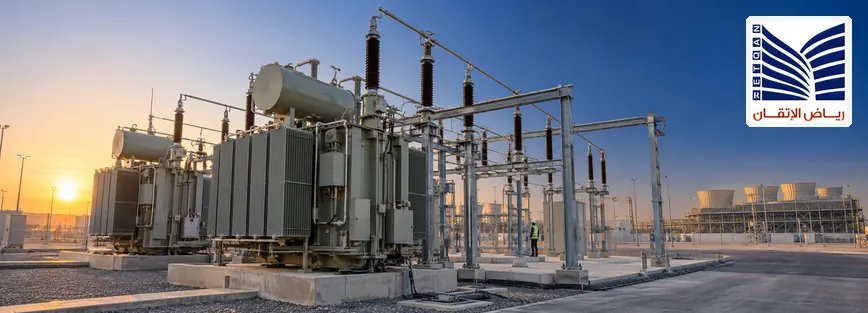
A plant expansion may justify an ETAP load flow study Saudi Arabia when new electrical loads, additional transformers, modified feeders, or changes to the distribution arrangement could affect the existing network’s operating conditions. An industrial load flow study helps engineers evaluate bus voltages, power flows, and equipment loading under defined scenarios before finalizing expansion decisions. Not every project requires a new study, but uncertainty about available capacity, existing voltage conditions, or the effect of additional demand can make an assessment valuable. The decision should be based on the proposed changes, available network data, equipment ratings, operating requirements, and project-specific engineering criteria.
Quick Answer: When Should a Plant Consider a Load Flow Study?
A plant should consider a load flow study when a proposed expansion could materially change electrical demand, voltage conditions, equipment loading, or the network’s operating configuration. Common triggers include adding large motors, installing transformers, extending LV/MV distribution networks, increasing production capacity, or investigating existing voltage and loading concerns. Engineers should establish the study scope using the current electrical network model, proposed loads, equipment data, and relevant operating scenarios. The need for analysis depends on the project and cannot be determined by a universal loading threshold.
- Adding large motors, pumps, compressors, or production lines.
- Installing additional transformers or distribution boards.
- Extending low-voltage or medium-voltage distribution networks.
- Changing transformer arrangements or bus configurations.
- Investigating voltage deviations or possible equipment overloading.
- Assessing peak demand and relevant alternative operating scenarios.
- Checking whether the existing network can support the proposed expansion.
The purpose is to identify potential constraints early enough for the project team to evaluate appropriate engineering options before equipment selection and expansion decisions are finalized.

What Does an ETAP load flow study Saudi Arabia Evaluate?
An ETAP load flow study uses an electrical network model to calculate steady-state operating conditions for a defined combination of sources, transformers, cables, feeders, buses, and loads. The results help engineers understand how electrical power is distributed throughout the modeled system and whether voltage conditions or equipment loading require further investigation.
Depending on the model and study scope, the assessment may evaluate:
- Bus voltages: calculated voltage magnitude at relevant points in the distribution network.
- Active and reactive power flows: how real and reactive power move through the modeled system.
- Equipment loading: calculated loading of transformers, cables, feeders, and other modeled components.
- Transformer loading: how the proposed demand affects individual transformers under selected operating conditions.
- Power factor and reactive power: aspects of the network that may influence distribution performance and compensation requirements.
- System losses: calculated electrical losses within the represented network.
- Operating configurations: differences between selected normal, high-demand, or alternative network arrangements.
ETAP describes its load flow functionality as supporting bus-voltage, current, power-flow, loss, power-factor, and voltage-drop calculations. The engineering value of the results depends on the accuracy of the network model, input data, load assumptions, source representation, and selected operating scenarios.
For industrial facilities reviewing their distribution infrastructure, LV/MV switchgear and electrical systems provide relevant context for the equipment and network arrangements that may be affected by a proposed expansion. The actual study scope must be established from the plant’s requirements and available data.
Load Flow vs. Short-Circuit Analysis
Load flow analysis evaluates steady-state operating conditions, while short-circuit analysis calculates fault currents under specified fault assumptions and network configurations. The two studies answer different engineering questions.
A load flow result showing acceptable operating conditions does not establish that a circuit breaker has sufficient interrupting capacity or that switchgear can withstand the relevant short-circuit stresses. Those questions require appropriate equipment data and fault-level assessment.
Load Flow vs. Protection Coordination
Protection coordination examines how protective devices operate in relation to one another under defined fault conditions. It addresses matters such as selectivity, protective settings, and the intended sequence of fault isolation.
Load flow results may provide useful information about normal operating conditions, but they do not replace a dedicated protection coordination study. Where expansion work affects the protection arrangement, the project team should determine whether a separate review is necessary. R-Aletqan’s protection relay solutions page identifies protection coordination studies as part of its published protection-related services.
When Other Electrical Studies May Also Be Needed
Depending on the engineering question, a project may also require short-circuit analysis, protection coordination, arc-flash assessment, harmonic analysis, motor-starting analysis, or another power system assessment. These studies are not automatically required for every expansion. The engineering team should identify which questions remain unanswered by the load flow study and define any complementary work accordingly.
Plant Expansion Scenarios That May Justify a Load Flow Study
Adding Large Motors or New Production Lines
New production lines, pumps, compressors, fans, and other substantial electrical loads can increase demand on the existing distribution network. Before connecting the additional equipment, engineers should assess its expected operating demand alongside the loads already supplied by the system.
Useful information may include motor ratings, rated voltage, expected operating load, power factor, efficiency where applicable, duty cycle, and anticipated simultaneous operation. The assessment should use a justified demand basis rather than simply adding every nameplate rating or assuming that all equipment will operate at its rated power continuously.
Steady-state load flow analysis evaluates running conditions. If motor starting could introduce a separate voltage-dip or starting-performance concern, a motor-starting assessment may also be appropriate. A satisfactory steady-state result alone does not establish that every motor can start successfully under all operating conditions.
Installing Additional Transformers or Distribution Boards
Adding a transformer or distribution board does not automatically resolve an upstream capacity constraint. The new equipment may redistribute loads, but the upstream source, transformer arrangement, feeder impedance, and total demand still influence the resulting operating conditions.
Engineers should review the proposed transformer ratings, voltage ratios, impedance data, tap arrangements where relevant, downstream loads, and intended connection to the existing network. The study should represent the proposed arrangement accurately and evaluate the relevant operating scenarios.
Transformer and switchgear selection must also account for requirements beyond load flow results, including applicable ratings, fault conditions, protection, thermal considerations, and the manufacturer’s design information.
Expanding LV or MV Distribution Networks
Adding feeders, switchgear sections, downstream distribution boards, or new electrical routes can change the distribution of power across the network. Longer cable routes, different conductor characteristics, and changes to the source or bus arrangement may influence calculated voltage profiles and equipment loading.
The model should reflect the intended electrical arrangement, including the relevant cable and feeder parameters, transformer connections, source conditions, and expected loads. Where a plant operates through alternative transformer or bus arrangements, the project team should identify which configurations need to be assessed.
For projects involving different voltage levels, R-Aletqan’s low-voltage distribution solutions and medium-voltage distribution systems pages provide relevant context for the types of equipment involved. The requirement for a specific engineering study should still be confirmed for the project.
Increasing Demand on an Existing Electrical Supply
A plant may increase electrical demand without installing a new transformer or replacing existing switchgear. Additional operating hours, higher production throughput, new auxiliary equipment, or changes to simultaneous operation can still alter network loading.
A plant electrical expansion study should establish the existing operating baseline and compare it with a justified forecast of the proposed demand. Useful inputs include actual operating measurements where available, load schedules, equipment ratings, expected operating patterns, and documented demand assumptions.
Load diversity and simultaneous-operation assumptions should be based on relevant plant information or an agreed design basis. Applying an arbitrary diversity factor or a universal equipment-loading threshold can lead to misleading conclusions.
Investigating Voltage or Equipment-Loading Concerns
Existing voltage deviations, heavily loaded feeders, or uncertainty about transformer utilization may justify reviewing the network model before adding more demand. A study can help identify where the modeled system may experience constraints under the selected conditions.
Calculated results should be distinguished from field measurements. Actual voltage readings, demand records, and equipment operating data can help engineers assess whether the model reflects the plant’s real operating conditions. Where the data disagree, the assumptions and network representation should be reviewed before conclusions are accepted.
Changing the Network Configuration or Operating Philosophy
Changes to transformer arrangements, bus-section configurations, or planned operating modes can alter how loads are supplied. A configuration that is suitable under one operating arrangement may produce different voltage or loading results under another.
The study should identify each relevant configuration and represent its equipment status consistently. Switching arrangements must be based on the approved operating philosophy and verified plant information. The analysis itself is not an instruction to change energized equipment or perform live switching.
What Information Is Required Before Starting an ETAP Load Flow Study?
Useful load flow study inputs allow the engineering team to build a sufficiently accurate representation of the existing network and the proposed expansion. Missing or outdated information should be identified and treated as an assumption or data limitation rather than silently replaced with unverified values.
Electrical Single-Line Diagram
Provide the latest available single-line diagram showing the relevant sources, transformers, main and downstream switchgear, buses, feeders, cables, major loads, and proposed equipment. Include relevant bus couplers or sectionalizing arrangements where they affect the intended network configuration.
An outdated drawing can omit installed equipment or represent a connection arrangement that no longer exists. Where the drawing does not reflect the actual plant, the discrepancy should be recorded and resolved to the extent required for the study.
Source and Transformer Data
Depending on the network, engineers may require:
- Source voltage and available source information.
- Transformer ratings and voltage ratios.
- Transformer impedance and other relevant nameplate data.
- Tap range and operating position where relevant.
- Connection and grounding information where it affects the model.
- Existing transformer and source operating arrangements.
Source characteristics and transformer parameters should come from verified documentation or appropriately established engineering data. Do not assume that an undocumented impedance, source strength, or tap position is correct simply because a software model requires a value.
Cable, Feeder, and Switchgear Information
Collect relevant cable and feeder identification, route lengths, conductor details, electrical parameters, equipment ratings, busbar arrangements, and manufacturer data where available.
Data quality matters because an incorrect cable length, conductor specification, or equipment rating can affect the interpretation of the results. The required level of detail depends on the model boundary and study objectives.
Switchgear ratings and short-circuit capability must be assessed using the relevant equipment data and fault-level requirements where applicable. A load flow study by itself does not confirm short-circuit adequacy.
Load and Motor Data
For existing and proposed loads, provide relevant information such as:
- Equipment identification and function.
- Rated power and operating demand, where known.
- Rated voltage and power factor.
- Efficiency where applicable.
- Expected loading, duty cycle, and operating pattern.
- Assumptions about simultaneous operation.
- Motor-starting characteristics where a separate starting assessment is considered.
Nameplate ratings are important, but they do not always represent actual operating demand. Where practical, combine equipment information with operating records or justified design assumptions. Clearly identify estimated values so the engineering team can assess their influence on the conclusions.
Existing and Proposed Network Configurations
Document the current network arrangement and the proposed configuration after expansion. Identify normal operating modes, planned transformer arrangements, expected source availability, and any alternative configurations that the project needs to assess.
The engineering team should agree on the study boundary, scenarios, assumptions, and required outputs before analysis begins. This helps prevent uncertainty about whether a proposed feeder, load, or contingency was included in the assessment.
Which Operating Scenarios Should Engineers Evaluate?
Scenario selection should reflect how the plant is expected to operate. A model may produce technically valid calculations for the conditions entered, but those results are only useful for the project if the selected conditions represent the engineering questions being investigated.
Normal Operating Scenario
The normal scenario represents the expected network arrangement and representative demand. Engineers should identify the intended source configuration, equipment status, transformer arrangement, and load assumptions used for the baseline calculation.
Peak or High-Demand Scenario
Where relevant, a high-demand scenario evaluates the network under a justified increase in operating demand. The demand basis may come from production plans, load schedules, measured operating information, or an agreed project design basis.
The objective is not to invent an arbitrary worst-case load but to evaluate a credible scenario that matters to the proposed expansion.
Relevant Contingency Scenarios
Some projects require analysis of alternative conditions, such as a transformer or feeder being unavailable, if that condition is relevant to the plant’s design or operating philosophy. The selected contingency should be explicitly defined, including the assumed equipment status and network arrangement.
Not every possible contingency must be included in every load flow study. The scope should reflect project requirements and identify any additional analysis needed to address specific operational or reliability questions.
Compare the Existing and Proposed Expansion
Comparing the existing and proposed configurations using consistent assumptions helps engineers identify the changes associated with the expansion. Where the input assumptions differ, the report should explain those differences so that their effects are not mistaken for the effect of the new equipment alone.
| Scenario | What It Represents | Key Questions |
|---|---|---|
| Existing baseline | Current network and representative demand. | What are the present voltage and loading conditions in the modeled system? |
| Proposed expansion | Existing network plus new loads or equipment. | Can the modeled system support the intended operating conditions? |
| High-demand operation | A justified higher-demand condition. | Which components experience increased loading or require further review? |
| Selected contingency | A relevant alternative network configuration. | How do voltage and loading conditions change when the selected element is unavailable? |
These scenarios are illustrative. The final set must be tailored to the project scope, plant operating requirements, and agreed engineering criteria.
How to Interpret Load Flow Study Results
Voltage Profiles
Calculated bus voltages help engineers identify locations where voltage conditions may need further review. The interpretation depends on the nominal voltage, equipment requirements, applicable utility or project criteria, and the design basis used for the assessment.
There is no single voltage limit that can be applied indiscriminately to every plant and every operating condition. The study report should state the criteria used and identify any results that require engineering review.
Equipment Loading
Calculated loading helps engineers identify transformers, cables, feeders, and other modeled components that may be approaching or exceeding their applicable design limits under the scenarios assessed.
The relevant limit depends on equipment ratings, installation and operating conditions, manufacturer information, and applicable design requirements. A result should be interpreted against verified data rather than an invented universal percentage.
If a component appears constrained, the result can support further investigation of equipment ratings, load allocation, network arrangements, or alternative expansion options. The appropriate response requires engineering evaluation and should not be inferred from a single result in isolation.
Losses and Reactive Power
Power-flow and loss results can help engineers understand how the modeled network distributes real and reactive power. Where relevant, the findings may prompt a review of power factor, reactive power demand, or the suitability of existing compensation arrangements.
However, a load flow result does not automatically establish the need for a capacitor bank, transformer replacement, or another specific solution. Any proposed change should be assessed against the plant’s actual operating conditions and other applicable engineering requirements.
Potential Engineering Actions
Depending on the findings, engineers may consider:
- Reviewing transformer capacity or the proposed transformer arrangement.
- Reassessing cable and feeder selection.
- Reviewing distribution and load-allocation arrangements.
- Investigating voltage constraints.
- Reviewing reactive power requirements where relevant.
- Evaluating alternative operating configurations.
- Commissioning complementary studies where the engineering questions require them.
These are potential responses, not automatic recommendations. A load flow result should inform the design decision rather than replace equipment selection, protection review, or other necessary engineering verification.
What Should a Useful ETAP Load Flow Study Report Include?
Before commissioning an ETAP electrical study, agree on the expected report contents and supporting evidence. A useful report should allow the project team to understand what was modeled, which assumptions were used, what scenarios were assessed, and how the findings relate to the proposed expansion.
Depending on the agreed scope, deliverables may include:
- Study objectives, scope, and system boundary.
- Description of the modeled electrical network.
- References to source drawings and input data.
- Model assumptions, data limitations, and unresolved gaps.
- Existing and proposed network configurations.
- Operating scenarios evaluated and their underlying assumptions.
- Bus-voltage and equipment-loading results.
- Relevant power-flow, reactive-power, and loss summaries.
- Identified constraints or items requiring further review.
- Recommendations with their engineering rationale.
- Model or report revision identification, where applicable.
- Conclusions, limitations, and proposed follow-up studies where needed.
The final deliverables must be agreed before work begins. A particular model file, detailed calculation output, drawing update, or additional study should not be assumed to be included unless it forms part of the confirmed scope.
Common Mistakes When Planning a Plant Expansion
- Assuming spare capacity exists: apparent spare nameplate capacity does not establish that the full distribution network can support the proposed demand. Review the relevant network and operating conditions.
- Using outdated drawings: an incorrect network representation can undermine the model. Confirm the latest available single-line diagram and identify discrepancies.
- Equating connected load with operating demand: equipment ratings do not necessarily represent actual demand. Document justified loading and simultaneous-operation assumptions.
- Omitting significant loads: missing equipment can distort calculated power flows and loading. Review the load register against the proposed expansion and existing installation.
- Ignoring operating configurations: results for one network arrangement may not represent other intended modes. Define the configurations relevant to the project.
- Assessing too few scenarios: a single scenario may not answer the engineering question. Agree on the normal and any justified additional scenarios before the study begins.
- Treating load flow as a substitute for fault analysis: acceptable steady-state results do not establish short-circuit or protection adequacy. Determine whether complementary studies are needed.
- Accepting results without checking assumptions: uncertain inputs can limit the conclusions. Document data gaps and assess their significance.
- Selecting equipment from one result alone: load flow is only one part of equipment selection. Review ratings, fault conditions, protection, installation requirements, and other applicable criteria.
- Treating software output as automatic proof of compliance: calculations do not independently establish regulatory or project compliance. Appropriate engineering review against applicable requirements remains necessary.
How to Prepare an RFQ for an ETAP Load Flow Study
A clear request for quotation helps an engineering provider understand the expansion, the information available, and the questions the study is expected to answer. Before requesting a proposal, project and procurement teams should prepare the following:
- Describe the proposed expansion. Identify the new production lines, motors, transformers, distribution boards, or other significant changes.
- Provide the latest available single-line diagram. Identify the current network boundary and the proposed additions.
- List existing and proposed loads. Include equipment ratings and expected operating demand where known.
- Collect source and equipment data. Provide available transformer, cable, feeder, and switchgear information.
- Identify current and proposed configurations. Explain the intended network arrangement and any relevant alternative modes.
- Define the required scenarios. State the normal operating condition and any justified high-demand or contingency cases.
- Describe known concerns. Identify voltage deviations, heavily loaded components, or uncertainties about capacity.
- State the engineering questions. Explain which decisions the study should inform.
- Specify expected deliverables. Agree on the report, results, supporting records, and any model documentation required.
- Identify missing information. Ask the provider to list required data, assumptions, and limitations before the analysis proceeds.
- Clarify complementary studies. Determine whether short-circuit, protection coordination, motor-starting, or other assessments are also needed.
- Request a defined scope and quotation. Ask the provider to confirm the study boundary, scenarios, inputs, deliverables, and exclusions.
A well-prepared enquiry does not require every technical detail to be available immediately. It should distinguish confirmed data from estimates and identify which gaps must be resolved before reliable conclusions can be drawn.
Discuss Your Plant Expansion and Load Flow Study Requirements
When a proposed expansion changes the electrical demand or network configuration, an initial engineering discussion can help determine whether a load flow study is appropriate and what information is needed to define its scope.
R-Aletqan’s published medium-voltage switchgear solutions page lists load flow studies using ETAP software. The specific study scope, required inputs, operating scenarios, and deliverables should be confirmed for the proposed project before work is commissioned.
Prepare the available single-line diagram, existing and proposed load information, transformer and feeder data, and any known voltage or loading concerns. This information can help frame the engineering questions and identify missing inputs for the initial technical discussion.
To discuss the proposed expansion and available electrical system data, contact R-Aletqan at (+966) 920012931 or use the contact page to enquire about the appropriate study scope.
Frequently Asked Questions
1. When Does a Plant Expansion Need an ETAP Load Flow Study?
A plant expansion may warrant a load flow study when new loads, transformers, feeders, or network changes could affect voltage conditions, power flows, or equipment loading. The need depends on the scale of the change, existing network capacity, equipment characteristics, operating scenarios, and project requirements. An engineering team should review available system data and define the study scope rather than assume that every expansion requires the same assessment.
2. What Information Is Required for an ETAP Load Flow Study?
Typical inputs include an up-to-date electrical single-line diagram, source and transformer data, cable and feeder parameters, switchgear information, existing and proposed loads, and the intended network configurations. Engineers may also need operating records, load assumptions, and information about relevant alternative scenarios. The required data depends on the model boundary and study objectives. Missing or estimated information should be identified and its effect on the conclusions considered.
3. What Does a Load Flow Study Reveal About Transformer and Feeder Loading?
A load flow study calculates how the modeled demand is distributed through transformers, feeders, cables, and other network components under specified operating conditions. The results can help identify components that require further review against their applicable ratings and operating limits. Conclusions depend on verified equipment data, network parameters, load assumptions, and scenario selection. The results should not be interpreted using a universal loading threshold that may not apply to the installation.
4. Can a Load Flow Study Determine Whether New Equipment Is Suitable?
A load flow study can help assess how proposed equipment and additional demand affect steady-state network conditions. It does not, by itself, establish that equipment is suitable in every respect. Selection may also require checks of rated voltage and current, short-circuit capability, protection, motor-starting performance, installation conditions, and other design requirements. The appropriate combination of assessments depends on the equipment, system configuration, and project criteria.
5. What Is the Difference Between Load Flow and Short-Circuit Analysis?
Load flow analysis evaluates steady-state voltage, power-flow, and equipment-loading conditions. Short-circuit analysis evaluates fault currents under defined fault assumptions and network configurations. They address different engineering questions and are not interchangeable. A satisfactory load flow result does not prove that switchgear has sufficient fault-interrupting capability or that the protection arrangement is adequate. Additional fault-level and protection assessments may be needed, depending on the project.
6. Should Normal and Contingency Operating Scenarios Be Included?
The study should include the normal operating scenario and any additional scenarios required to answer the project’s engineering questions. Depending on the plant’s operating philosophy, these may include justified high-demand conditions or selected cases where a transformer or feeder is unavailable. Not every possible contingency must be assessed in every project. The scenarios should be agreed in advance and represent credible operating arrangements relevant to the proposed expansion.
7. Can a Load Flow Study Identify Voltage Problems Before a Plant Expansion?
A load flow study can identify modeled bus-voltage conditions that may require further engineering review under the selected scenarios. Its usefulness depends on the accuracy of the network representation, source data, cable parameters, and load assumptions. Where available, field measurements and operating records can help validate the model. Any voltage concern should be assessed against the applicable project criteria, equipment requirements, and utility conditions rather than a universal limit.
8. What Should an Engineering Team Request in a Load Flow Study Report?
Request a clear description of the study scope, modeled network, input data, assumptions, operating scenarios, voltage and equipment-loading results, relevant power-flow summaries, identified constraints, and engineering conclusions. The report should also identify data limitations and any recommended follow-up assessments. Model files, detailed outputs, drawing updates, and other deliverables should be explicitly agreed in advance rather than assumed to be included in every study.
Conclusion: Define the Study Scope Before Finalizing the Expansion
An ETAP load flow study Saudi Arabia can support plant expansion planning when proposed changes may affect electrical demand, voltage profiles, equipment loading, or network operating arrangements. Its value depends on an accurate model, justified load assumptions, relevant operating scenarios, and clearly defined engineering questions.
Before commissioning the study, compile the available single-line diagram, source and transformer data, cable and feeder information, existing and proposed loads, and the intended network configurations. Agree on the report deliverables and identify any additional assessments needed to address questions that load flow analysis cannot answer on its own.
For an initial discussion about your plant expansion, available electrical system data, and the appropriate study scope, contact R-Aletqan contact page.