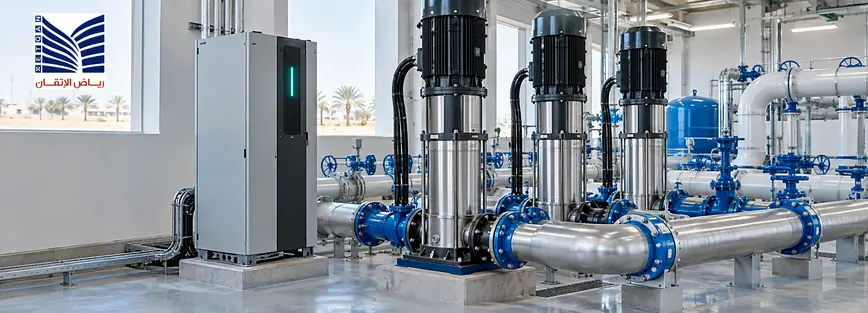
A Saudi-based industrial drives provider should be able to size, supply, install, and commission VFD systems for pump applications across industrial facilities in Saudi Arabia. For buyers evaluating a VFD for pumps supplier, the right choice is usually the one that can support pump application engineering, commissioning, troubleshooting, and long-term serviceability rather than simply delivering a drive.
That matters because pump applications are not generic motor applications. A pump-focused VFD has to match the motor, the control method, the hydraulic behavior, the site environment, and the startup sequence. A weak supplier may still provide the hardware, but a stronger supplier reduces risk during commissioning, operation, and later maintenance.
Why a pump-specific buying process matters
Not every VFD project should be treated the same way. Pump applications often need a more application-specific review because the drive may be expected to handle:
- variable torque duty
- pressure or flow control
- PID-based operation
- sleep and wake logic
- dry-run or pipe-break response
- multi-pump coordination
- soft filling or controlled ramping
- field integration with the site control system
That means buyers should evaluate the supplier on engineering support, commissioning scope, and lifecycle fit, not only on voltage and kilowatt rating.
What a strong VFD for pumps supplier should actually provide
A strong supplier should support more than product selection. A useful scope usually includes:
- application review for the pump duty
- VFD sizing against actual motor data
- review of control philosophy and operating mode
- installation and commissioning support
- troubleshooting and fault review
- harmonic and power-quality review where needed
- documentation and as-left parameter records
- post-startup support
A good starting point is variable frequency drives and VSDs. If the supplier cannot explain how the drive will be selected, configured, and commissioned for the actual pump application, the project risk remains high even if the drive itself is available.
What to check before requesting a quotation
1) Real motor data, not only horsepower
A proper quotation should be based on motor voltage and current, not only on motor power. The supplier should review the nameplate data, duty, full-load current, and actual operating conditions before finalizing the drive size.
2) Pump application type
The supplier should confirm whether the application is for water supply, booster service, HVAC pumping, wastewater, irrigation, cooling water, process transfer, or another pump duty. Different applications often require different control features and response logic.
3) Control method
The project should define whether the pump will run at fixed setpoint control, PID control, pressure control, flow control, level-based operation, lead-lag operation, or multi-pump duty sharing. A supplier that skips this discussion is usually sizing the drive too early.
4) Site environment
A good supplier should review the actual site conditions, including temperature, dust, enclosure needs, cable routing, and operating continuity. These points affect installation quality, protection level, and long-term reliability.
5) Existing motor and system condition
If the project is a retrofit, the supplier should also review the existing motor condition, cable condition, overload history, and prior trip history before recommending the final configuration.
For that reason, it often helps to align the drive scope with how to select a VFD for a motor before final approval.
Why commissioning scope should be a major buying criterion
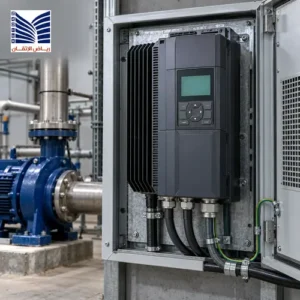
A pump VFD project is not complete when the drive powers up. It is complete when the motor starts correctly, the pump rotates correctly, the control logic is verified, the process setpoint is stable, and the site has usable as-left documentation.
A stronger supplier should define a commissioning scope that includes:
- motor data verification
- wiring and grounding checks
- rotation check
- parameter setup
- control I/O checks
- pressure, flow, or PID verification
- alarm and fault review
- startup test under actual operating conditions
- final parameter backup and handover records
If these points are vague, the plant will usually carry the real risk during startup.
Useful supporting internal references include VFD installation requirements and VFD preventive maintenance checklist.
Documentation quality is one of the clearest buying filters
A good supplier should leave behind more than a running drive. The site should receive useful technical records for future maintenance and troubleshooting.
That usually includes:
- final parameter list
- control philosophy notes
- I/O mapping and setpoint references
- startup results
- alarm and trip notes
- as-left records after commissioning
This matters because pump applications are often tuned after startup. If the plant later needs to adjust pressure setpoints, ramp rates, sleep thresholds, or fault behavior, the project becomes much easier to support when the original documentation is clear.
Why pump-specific features should be reviewed early
A pump application often benefits from features that are not equally important in all other drive projects. Depending on the duty, the supplier may need to discuss:
- PID control
- sleep mode
- dry-run protection
- pipe-fill or soft-fill behavior
- multi-pump staging
- low-flow behavior
- fault behavior during loss of demand
- harmonic mitigation where multiple drives are involved
This is where a true industrial VFD supplier adds more value than a catalog reseller. The supplier should be able to explain not only what the drive can do, but which functions should actually be used in the plant.
A useful related internal reference is harmonic distortion in VFD systems, especially for larger pump stations or sites with multiple drives.
After-sales support should be treated as a technical service
After-sales support matters because pump systems often change after the initial startup. Pressure requirements may be revised, network conditions may shift, and maintenance teams may need help interpreting trips, overloads, or unstable process response.
A strong supplier should be able to explain:
- how faults are diagnosed after startup
- whether remote or site support is available
- how parameter changes are controlled
- how trip history is reviewed
- how future upgrades or replacement planning will be handled
This is one reason the plant should evaluate the supplier on service process, not only on drive availability.
Helpful supporting internal references include what causes a VFD to trip, VFD tripping on overcurrent, and VFD motor overload fault.
A practical buyer checklist for Saudi industrial teams
Before choosing a VFD for pumps supplier, project teams should confirm five things.
Sizing support
Can the supplier size the drive using real motor data and application requirements rather than only a rough power match?
Pump application understanding
Can the supplier explain how the drive will control the actual pump duty and what pump-specific features are needed?
Commissioning scope
Can the supplier define what will be tested and verified before handover?
Documentation quality
Will the site receive useful parameter records, startup notes, and as-left settings?
After-sales support
Can the supplier help when trips, instability, or future tuning needs appear after startup?
That checklist is much more useful than comparing drives only by headline rating or brochure features.
FAQ
What should I compare first when choosing a VFD for pumps supplier?
Start with application fit, sizing support, pump-control features, commissioning scope, documentation quality, and after-sales support. These factors usually affect reliability more directly than price alone.
Why is a pump application different from a general motor application?
Because pump systems often need pressure or flow control, PID behavior, sleep logic, and application-specific protection such as dry-run or abnormal-demand response.
Why should commissioning scope be reviewed before award?
Because a pump drive is only proven when the motor, rotation, control logic, process response, alarms, and final settings have been tested under real operating conditions.
When should a plant involve a specialist team instead of treating the job as simple drive supply?
When the application includes retrofit work, process-critical pumping, repeated trip history, multi-pump coordination, harmonics concerns, or uncertain motor condition.
If your project needs a VFD for pumps supplier for sizing, installation, or commissioning support, start with variable frequency drives and VSDs and request a technical review based on the actual pump duty, motor data, and control philosophy. For direct coordination and quotation support, contact us