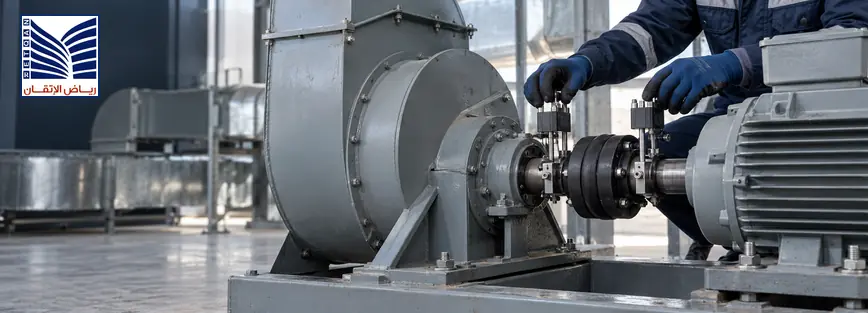
This Saudi-based rotating-equipment service scope covers motor supply, on-site maintenance, electrical tests, overhauling, rewinding, test-bench support, and annual maintenance contracts for industrial sites, including Riyadh-area projects. For plants looking for motor maintenance services Riyadh, the safest approach is to start with inspection, testing, and root-cause review before deciding on repair, rewinding, or replacement.
Riyadh’s official city timeline notes the establishment of the first industrial city in 1969, which helps explain why local buyers should evaluate service coverage, response planning, and shutdown support carefully rather than treating motor maintenance as a simple workshop job. In a city with long-established industrial activity, practical support speed can matter as much as repair quality.
What to check first before approving maintenance work
The first question is whether the problem is truly a motor problem. Common symptoms such as overheating, tripping, vibration, poor starting, and low output torque can come from winding insulation breakdown, bearing wear, contamination, cooling issues, voltage problems, or load-related stress. Fluke’s motor-failure guidance identifies winding insulation breakdown and bearing wear as the two most common failure categories, while also making clear that many different root causes sit behind them.
Before approving repair work, the plant team should usually check insulation condition, bearing condition, vibration behavior, signs of overheating, contamination, load history, and whether the motor is running directly on line or through a drive. That is especially important because the available service scope includes LV and MV, AC and DC motors, on-site motor maintenance services, on-site overhauling, rewinding, and annual testing and maintenance contracts up to 8 MW.
If the motor is part of a speed-controlled application, it should not be reviewed in isolation. IEC TS 60034-25 is specifically an application guide for AC electrical machines used in power drive systems and addresses the interaction between the machine and the converter, including installation guidance. For those cases, it is worth reviewing industrial electric motors together with variable frequency drives and VSDs.
Common issues that usually trigger service requests
Overheating
Overheating is one of the clearest signs that the motor needs closer investigation. It can be related to insulation stress, cooling restrictions, overload, poor ventilation, or power-quality issues. Fluke’s guidance notes that winding insulation and bearing failures are often preceded by identifiable warning signs, which means overheating should be treated as a root-cause problem, not only a symptom.
Bearing wear and vibration
Bearing-related issues are among the most common motor problems in industrial service. Once vibration and bearing wear are present, the damage can spread into alignment problems, mechanical stress, and wider motor deterioration. That is one reason a maintenance provider should be able to support more than basic electrical checks and should also understand overhaul and balancing decisions.
Winding insulation deterioration
Insulation breakdown is one of the strongest reasons to escalate from routine maintenance into deeper testing or repair. If trending shows deterioration over time, the plant should move beyond simple reset-and-restart behavior and into a structured repair assessment. Repair best practice matters here because ANSI/EASA AR100-2025 exists specifically to establish recommended practices for rewinding and rebuilding rotating electrical apparatus, including record keeping, tests, and analysis.
Repeated trips on drive-fed motors
When the motor is fed by a converter, repeated trips may reflect motor condition, cable issues, installation quality, or the motor-drive interface rather than the motor alone. IEC TS 60034-25 makes that point directly by covering the interaction between AC machines and converter supplies. In those cases, useful supporting references include how to select a VFD for a motor, VFD preventive maintenance checklist, and what causes a VFD to trip.
When rewinding should be considered
Rewinding should be considered when test evidence and inspection show that the winding system is genuinely compromised and the motor remains a sound candidate for return to service. It should not be treated as the default answer to every trip or every hot motor. EASA’s AR100-2025 states that its purpose is to establish recommended practices for each step of rotating-apparatus rewinding and rebuilding processes, while EASA’s motor-efficiency guidance says service centers can retain motor efficiency during rebuilding when proper practices are followed.
That is why motor rewinding and balancing Saudi Arabia support should be judged on repair method, pre- and post-repair testing, record keeping, and final documentation. A plant should be able to ask what was inspected, what was repaired, what was tested, and what the as-left condition is. If those answers are unclear, the job is being treated as a workshop transaction rather than an engineering service.
What local Riyadh buyers should compare
For Riyadh-based plants, the most useful comparison points are usually service coverage, mobilization readiness, field test capability, rewinding quality, and whether the provider can support both planned shutdown work and urgent response. Since Riyadh has a long-established industrial base, local-commercial value is often created by how quickly the supplier can move from diagnosis to documented action, not just by whether the motor can be quoted.
A stronger buyer checklist usually asks:
- Can the provider support both LV and MV motors?
- Can the provider perform on-site electrical tests and overhauling?
- Can the provider explain when rewinding is appropriate and when it is not?
- Can the provider support motor-and-drive review together?
- Can the provider issue useful records and support annual maintenance planning?
Risk indicators that mean it is time to call a specialist team
A plant should stop treating the issue as routine and escalate when one or more of these signs appear: recurring overheating, repeated trips after normal resets, persistent vibration, declining insulation results, repeated bearing problems, unclear repair history, or converter-fed duty with unresolved faults. Fluke’s motor-failure guidance supports this approach because it frames common motor failures as detectable, multi-cause events rather than sudden isolated breakdowns.
A specialist team also makes sense when the motor is critical to production, difficult to replace quickly, or part of a wider motor-drive system where process continuity matters. In those cases, the plant usually needs a combined assessment of machine condition, repair path, and operating environment rather than a quick single-task intervention.
FAQ
What should be checked first in motor maintenance services Riyadh?
Start with insulation condition, bearing condition, vibration, overheating evidence, contamination, and operating history before deciding whether the issue is routine maintenance, overhaul, or rewinding.
When should rewinding be considered?
Rewinding should be considered when testing and inspection show the winding system is genuinely compromised and the machine is still a good candidate for return to service. Recognized repair practice is defined in ANSI/EASA AR100-2025.
Why should drive-fed motors be reviewed differently?
Because IEC TS 60034-25 specifically addresses AC electrical machines used in power drive systems and the interaction between the machine and the converter. A converter-fed motor should be reviewed as part of the full drive system, not as a stand-alone motor.
What kind of service scope is most useful for industrial sites?
The most useful scope usually includes supply, on-site maintenance, electrical testing, on-site overhauling, rewinding, and annual maintenance support rather than supply-only help.
If your plant needs motor maintenance services Riyadh teams can trust for assessment, rewinding, overhaul, or planned maintenance support, start with industrial electric motors, review any connected speed-control scope through variable frequency drives and VSDs, and use contact the service team to book a motor assessment and request a quotation.