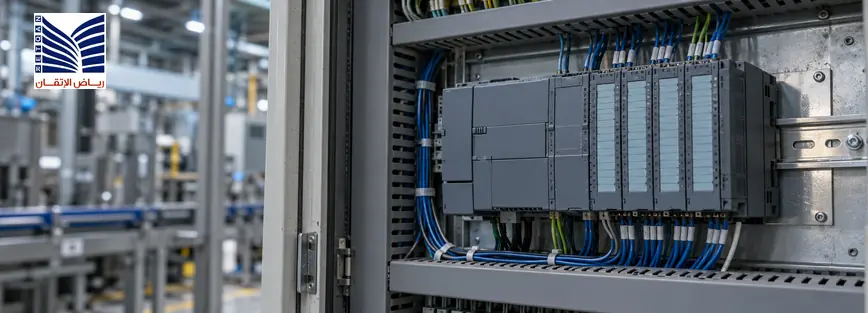
This Saudi-based automation provider supplies PLC systems, programming, HMI and SCADA integration, startup support, and troubleshooting for industrial projects across Saudi Arabia, including Riyadh. For buyers searching for a Siemens PLC supplier Riyadh plants can rely on, the right choice is usually the one that can support compatibility, commissioning, diagnostics, and lifecycle needs across the whole control system, not just deliver a CPU quickly. The available PLC service scope on the referenced product page includes PLC supply, PLC panel work, PLC and SCADA engineering, HMI design, startup and commissioning, troubleshooting, and upgrade support.
Why a brand-specific PLC choice needs a different buying process
A brand-specific PLC project is not just a hardware decision. It is also a software, diagnostics, integration, and lifecycle decision. IEC 61131-3 defines the syntax and semantics of a unified suite of programming languages for programmable controllers, while Siemens’ engineering platform guidance presents TIA Portal as an integrated engineering environment designed to support automation engineering in one platform. For plants already aligned to that ecosystem, supplier selection should focus on who can work inside that environment effectively, not who can only quote part numbers.
That is why a strong buyer process for Siemens industrial automation Saudi Arabia projects should ask a different set of questions. Instead of starting with price, start with installed-base compatibility, engineering-tool familiarity, diagnostic strategy, HMI and SCADA integration, spare-parts planning, and the quality of commissioning support the supplier can actually deliver.
What to check before requesting a quotation
1) Compatibility with the installed platform
If the plant already uses this PLC family, the supplier should first review the existing CPU generation, I/O family, engineering environment, HMI layer, and network structure. Siemens’ diagnostics overview for S7-1200 and S7-1500 explains that diagnostics covers all system components, process-sequence monitoring, and program-error diagnosis, which shows why platform compatibility matters beyond the controller itself. A supplier that cannot assess the whole environment usually creates more integration work during startup.
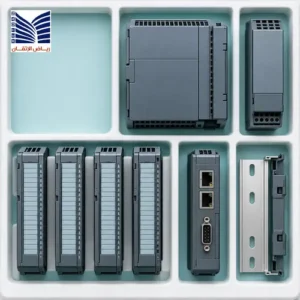
For that reason, the first internal step should be to review programmable logic controllers (PLCs) and confirm that the project scope includes supply, programming, and startup support rather than hardware only.
2) HMI and SCADA integration fit
A brand-specific PLC choice only works well when the operator layer is aligned with it. Siemens’ documentation for integrated system diagnostics states that with an HMI connection to S7-1200 or S7-1500, controller diagnostics can be activated on the HMI device, provided the integrated connection and runtime settings are configured correctly. That means HMI and SCADA integration is not a side issue. It is part of how faults are seen and cleared in real operations.
That is why buyers should review monitoring system solutions (SCADA, HMI) early in the process, especially when the project includes operator stations, alarm handling, or remote monitoring.
3) Programming and diagnostics capability
A good supplier should be able to support the platform not only during design, but also during diagnostics and live troubleshooting. Siemens’ official diagnostics overview says system diagnostics can display faults in plain text and help identify and correct errors quickly, while the S7-1500 diagnostics documentation shows that system diagnostics can be presented directly on HMI views. For plants, that means the supplier should be evaluated on real troubleshooting capability, not only programming claims.
This is where related internal references such as PLC programming and PLC fault finding techniques can help frame the support discussion even if the main project is brand-led.
4) Spare availability and lifecycle fit
Lifecycle fit is one of the most important parts of a brand-specific buyer decision. Siemens’ spare-parts service page says original spare parts for selected industry products remain available for up to ten years after product discontinuation, and lifecycle documentation for platform components states that when the final lifecycle milestone is reached, the spare-parts obligation ends and support is discontinued. For industrial buyers, that means supplier selection should include lifecycle planning from the beginning, especially for brownfield plants.
This is one reason a PLC supplier Saudi Arabia shortlist should be evaluated on spare strategy and lifecycle awareness, not just on current stock. A supplier that understands the platform lifecycle can usually guide upgrades and spare planning more safely than one that only quotes the current order.
Why engineering support matters more than brand alone
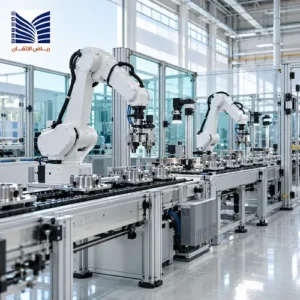
A plant can choose the right platform and still have a weak project if the supplier cannot support engineering execution. The live PLC service page includes PLC and SCADA engineering, HMI design, startup and commissioning, remote and on-site troubleshooting, modifications, and upgrades. That is a much more useful scope for industrial buyers than supply-only support because it reduces the handoff risk between procurement, programming, and operations.
This is particularly important for Riyadh projects where local response, installed-base familiarity, and service continuity can matter more than a small commercial difference. In practice, a strong PLC SCADA integration company Saudi Arabia should be able to explain how the controller, HMI, diagnostics, alarms, and field devices will behave together after handover.
Commissioning scope should be one of the main buying criteria
A PLC project is only really proven during commissioning. The product page already identifies startup and commissioning as part of the support scope, and official diagnostics guidance shows that the platform is designed to support error detection and correction through integrated diagnostics and HMI visibility. That means a strong supplier should define FAT or simulation where needed, I/O checks, communications checks, diagnostics setup, HMI testing, startup support, and final as-left backups before award.
If the quotation does not make those items clear, the project risk has not disappeared. It has just been moved into the startup window.
Documentation quality decides how supportable the project will be later
Documentation is one of the clearest signs of a serious supplier. A good handover should include the final program version, I/O allocation, network references, HMI diagnostics setup, backup method, and records of startup changes. Because system diagnostics and integrated engineering are central to this platform’s working model, clear documentation is what makes later support and troubleshooting practical.
That is also why after-sales support should be judged as a technical process, not a promise. The right supplier should be able to explain how backups are kept, how program changes are controlled, how diagnostics are reviewed, and how future expansion or replacement planning will be handled within the platform lifecycle.
A practical buyer checklist for Riyadh and wider Saudi projects
Before choosing a Siemens PLC supplier Riyadh teams should confirm five things. First, the supplier can assess compatibility with the existing PLC, HMI, and diagnostics environment. Second, the supplier can handle programming and troubleshooting inside the engineering platform. Third, the supplier can support integrated HMI and SCADA visibility. Fourth, the supplier understands spare availability and lifecycle timing. Fifth, the supplier can define startup, commissioning, and documentation scope clearly.
These criteria are more useful for brand-led projects than comparing catalog part numbers alone.
FAQ
What should buyers compare first when choosing a Siemens PLC supplier in Riyadh?
Start with compatibility, diagnostics capability, HMI and SCADA integration, commissioning scope, and lifecycle support. Those factors affect reliability and maintainability more directly than price alone.
Why does integrated diagnostics matter so much?
Because official Siemens diagnostics guidance says faults can be displayed in plain text and integrated into the control environment, which helps reduce troubleshooting time and improves visibility during operation.
Why should lifecycle fit be part of the buying decision?
Because official spare-parts and lifecycle information shows that support windows and spare availability are finite. A supplier that understands lifecycle timing can help the plant avoid avoidable obsolescence risk.
Should HMI and SCADA be evaluated together with the PLC?
Yes. Official documentation shows that system diagnostics can be presented on the HMI through integrated connections, which means controller choice and operator-layer design should be reviewed together.
If your plant needs a Siemens PLC supplier Riyadh teams can trust for supply, programming, or integration, start with PLC solutions, connect the operator layer through SCADA and HMI integration, and use contact the automation team to book a PLC consultation and request a quotation.