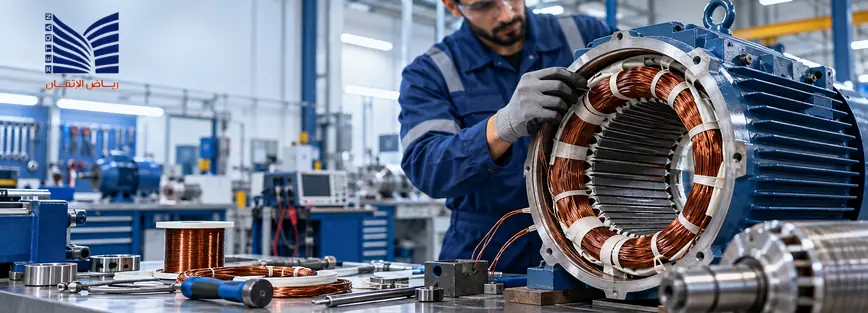
A Saudi-based rotating-equipment provider should be able to supply, test, rewind, overhaul, and maintain industrial motors across the Kingdom, not just deliver a catalog item. For buyers comparing an industrial electric motor supplier Saudi Arabia teams can rely on, the better choice is usually the supplier with stronger engineering support, clearer repair scope, and better lifecycle service, not simply the lowest quote. The referenced motor service page shows supply of LV and MV, AC and DC motors and spares, on-site maintenance and electrical tests, on-site overhauling, rewinding services, test-bench support, and annual maintenance contracts up to 8 MW.
Why price alone is a weak buying filter
An industrial motor project rarely succeeds or fails on purchase price alone. It usually succeeds or fails on application review, motor selection, repair quality, testing discipline, and how quickly the supplier can support the plant during startup or failure response. IEC 60034-1 is the core standard covering rating and performance for rotating electrical machines, which is a reminder that motor selection is a technical decision tied to duty, rating, and operating conditions.
That is why buyers should compare engineering depth, commissioning support, documentation, rewinding quality, and after-sales support before they compare commercial terms. A good starting point is industrial electric motors, then the buyer can assess whether the supplier’s scope fits the actual plant risk instead of only the purchase order.
What a serious motor supplier should be able to support
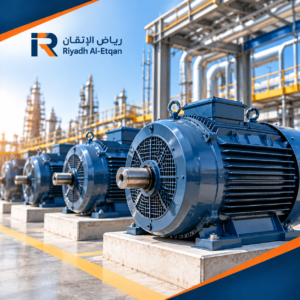
A strong supplier should be able to support more than standard motor supply. The live service page shows capability for standard induction motors, motors for hazardous atmospheres, frequency-controlled motors, special-application motors, LV and MV motors, AC and DC motors, spares, on-site maintenance, on-site overhauling, rewinding, test-bench support, and annual maintenance contracts. For procurement and maintenance teams, that kind of range matters because it means the supplier can usually stay involved when the job moves from supply into repair, field service, or shutdown support.
What to verify before requesting a quotation
Before asking for a quotation, the plant team should gather the motor nameplate data, operating voltage, duty, load type, ambient conditions, hazardous-area needs if any, starting method, and whether the motor will operate directly on line or with a drive. IEC 60034-1 supports the rating and performance side of that review, while IEC TS 60034-25 specifically addresses AC electrical machines used in converter-fed power drive systems, which means motor-and-drive interaction should be reviewed early where variable-speed operation is involved.
That is why a serious supplier should ask application questions before recommending a motor. If the motor is part of a speed-controlled process, it also makes sense to review variable frequency drives and VSDs alongside the motor scope rather than treating the motor as a separate purchase. The drive page explicitly describes support for retrofits and upgrades and lists drive coverage across LV and MV ranges and common industrial applications.
Rewinding and balancing should be treated as engineering work, not workshop convenience
One of the most important buying filters is how the supplier approaches repair quality. ANSI/EASA AR100-2025 exists to establish recommended practices for the repair of rotating electrical apparatus, including rewinding and rebuilding processes, and EASA’s motor-efficiency guidance says service centers can retain motor efficiency during rebuilding when proper practice is followed. That means motor rewinding and balancing Saudi Arabia support should be judged on repair method, testing, and documentation, not on speed alone.
For buyers, the practical question is simple: can the supplier explain the inspection path, repair decision, rewinding scope, balancing approach, and post-repair test evidence? If not, the plant is taking more risk than it may realize. A supplier that can support rewinding as part of a structured repair program usually reduces downtime risk much more effectively than a supplier that only promises fast turnaround.
Documentation quality matters after startup and after repair
A motor project is easier to support when the supplier leaves behind usable records. That should include nameplate confirmation, inspection findings, test results, repair scope, and the as-left condition of the machine after service. EASA’s repair standard highlights record keeping, tests, and analysis as part of recommended repair practice, which reinforces that documentation is not administrative overhead; it is part of technical quality.
This is where after-sales support also becomes easier to measure. A supplier that can maintain good records is usually better placed to support future maintenance contracts, recurring inspections, rewinds, and troubleshooting decisions. A supplier that cannot document the current condition of the machine usually cannot support the next failure efficiently either.
Motor and drive should often be evaluated together
Many industrial motor problems are really motor-and-drive problems. The motor page explains that VFDs adjust motor speed and torque by varying supply frequency and voltage, and the drive page describes retrofit and upgrade support for existing systems. IEC TS 60034-25 also exists because converter-fed machines have specific application and installation considerations that affect performance and reliability.
So if the project includes pump trains, fans, conveyors, compressors, or other variable-speed duties, the buyer should not evaluate the motor in isolation. A better process is to compare the motor supplier’s ability to support both the motor and the connected drive, especially where commissioning, rewinding decisions, or repeated failures are involved. Useful internal references for this are variable frequency drives and VSDs and how to select a VFD for a motor.
A practical buyer checklist for Saudi industrial teams
Before choosing an industrial motor supplier, buyers should confirm five things. First, the supplier can support both supply and repair, not only one of them. Second, the supplier can explain when rewinding is appropriate and how it will be controlled. Third, the supplier can support LV and MV applications where needed. Fourth, the supplier can work on converter-fed applications when drives are involved. Fifth, the supplier can document the machine condition and support the asset after handover. Those criteria are supported by the live service pages and by the EASA and IEC references above.
FAQ
What should buyers compare first when choosing an industrial electric motor supplier?
Start with engineering scope, repair capability, rewinding quality, documentation, and after-sales support. Those factors affect downtime risk more directly than price alone, especially where the supplier may also need to support overhauling, testing, or annual maintenance contracts.
Why does rewinding quality matter so much?
Because recognized repair practice matters. ANSI/EASA AR100-2025 is specifically a recommended-practice standard for repair of rotating electrical apparatus, and EASA says motor efficiency can be retained during rebuilding when proper procedures are followed.
Should a motor supplier also understand VFD applications?
Yes, especially for converter-fed motors. IEC TS 60034-25 specifically covers AC electrical machines used in power drive systems, which means the motor and the converter should be considered together where variable-speed operation is involved.
What kind of service scope is most useful for industrial sites?
The most useful scope usually includes motor supply, spares, field maintenance, overhauling, rewinding, test support, and long-term maintenance options. That combination is what reduces downtime risk when the plant moves from normal operation into failure response or planned shutdown work.
If your facility is evaluating an industrial electric motor supplier Saudi Arabia teams can trust for supply, rewinding, or maintenance support, start with industrial electric motors, review any connected speed-control scope through variable frequency drives and VSDs, and use contact the team to request a motor assessment and quotation.