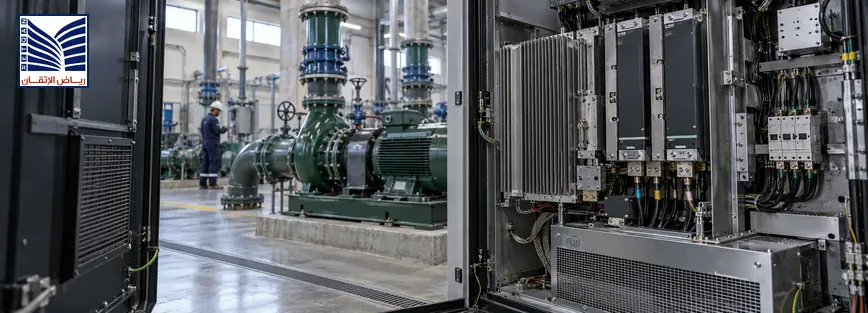
A reliable VFD supplier Saudi Arabia buyers should choose is one that can size the drive correctly, match it to the motor and load, address harmonics and EMC, and stay involved through installation, commissioning, and after-sales support. That is consistent with current manufacturer and IEC guidance: drive selection starts with application and motor data, EMC performance depends on how the system is installed, and safe operation depends on proper settings, wiring, grounding, and commissioning.
This is why the best buying decision is usually not the lowest-price decision. A strong industrial VFD supplier reduces project risk by reviewing motor nameplate data, load behavior, overload duty, cable length, enclosure needs, harmonics, and startup scope before supply. A weaker supplier often stops at kW and voltage, which is exactly how brownfield retrofits and new installations end up with nuisance trips, poor motor life, or commissioning delays.
What a strong VFD supplier should verify before offering a drive
The first sign of a serious variable speed drive supplier KSA is that they ask detailed application questions before they recommend a model. Official selection guidance says the drive must be chosen and configured for the application, and published VFD selection content also emphasizes matching the drive to motor power, voltage, and load type such as constant torque, variable torque, or constant power.
That means the supplier should ask about:
- motor rated voltage, current, speed, and duty
- load type and overload requirements
- starting and stopping profile
- ambient temperature, dust, and enclosure needs
- communication requirements with PLC or SCADA
- future expansion or retrofit constraints
If those questions are skipped, the quotation may still look complete, but the engineering usually is not. The right place to start is with the application itself, then the drive family, not the other way around.
Do not separate the drive from the motor too early
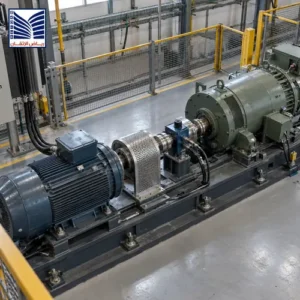
A VFD is not selected in isolation. It is part of a drive system that includes the power conversion stage, control, and the connected motor, which is exactly how IEC 61800-5-1 frames adjustable speed power drive systems. That is also why a serious supplier should be comfortable discussing both variable frequency drives and VSDs and the connected industrial electric motors as one engineered package, not two separate purchase lines.
This matters even more when cable runs are long or the site is retrofitting older motors. Rockwell’s installation paper notes that reflected-wave voltage can rise with cable length and may exceed 2 per unit, even up to 3 per unit in some cases, while NEMA MG 1 Part 31 specifically covers inverter-fed motors intended for adjustable-voltage and adjustable-frequency power. In practice, that means the supplier should review motor insulation suitability, output filtering needs, and cable route length before finalizing the package.
Harmonics and power quality should be part of the buying discussion
One of the clearest signs of engineering depth is whether the supplier raises harmonics before you do. ABB’s harmonics guide shows that evaluating distortion at an industrial facility starts with the point of common coupling, short-circuit capacity, demand current, and short-circuit ratio. That means a real supplier should be able to explain whether a standard 6-pulse drive is enough, or whether the project may need line reactors, filters, or low-harmonic solutions.
This is especially important for plants adding multiple drives, retrofitting sensitive facilities, or working with utility limits and internal power-quality targets. A quotation that ignores harmonics is usually incomplete. A better supplier should be comfortable linking the VFD choice to a harmonic distortion in VFD systems review when the site conditions require it.
EMC, grounding, and installation quality are not optional extras
A good VFD supplier Saudi Arabia project team should also discuss EMC and installation practice before the order is placed. IEC 61800-3 sets EMC requirements for adjustable-speed power drive systems, and manufacturer guidance states clearly that EMC compliance depends on implementing the installation measures described in the manual. Schneider’s drive guidance also warns not to operate with unknown or unsuitable settings or data and to perform a comprehensive commissioning test.
That is why a supplier should be able to explain grounding, shield termination, panel arrangement, cable segregation, filter requirements, and any cable-length limits that affect the design. If the offer only lists a drive model and a delivery time, but not installation assumptions, the risk has simply been moved from procurement to commissioning. Related topics such as VFD installation requirements should already be part of the technical conversation before purchase.
Commissioning support is where good suppliers separate themselves
A reliable supplier should not stop at delivery. Rockwell’s quick-start material frames drive work around installation, startup, and programming, while VACON guidance says application selection and preset parameter groups make commissioning easier and reduce manual parameter work. The same VACON guide also warns that changing applications or software can change I/O functions and create accidental-start risk if the motor is still connected.
That is why VFD installation and commissioning Saudi Arabia support should include more than power-up. At minimum, it should cover parameter verification, motor data entry, control I/O checks, communication checks, protection settings, test runs, fault handling, and a final as-left record. A supplier that cannot define its commissioning scope clearly is usually pushing startup risk back onto the client. Practical support should also connect with resources like how to select a VFD for a motor, what causes a VFD to trip, and VFD tripping on overcurrent because those are common field realities, not rare exceptions.
Documentation quality is a buying criterion, not paperwork
Procurement teams often compare model numbers, but engineering teams know that documentation quality is what makes startup repeatable. Good documentation should include the selected drive rating, overload basis, motor compatibility assumptions, harmonic assumptions, installation notes, commissioning sequence, and the final parameter backup. Manufacturer guidance also shows that maintenance schedules, inspection intervals, and software backup are part of lifecycle reliability, not only post-failure service.
That is one reason the best supplier is not just a seller of drives. It is a supplier that can support the asset after startup with inspections, software backup, troubleshooting, and practical service guidance. A client should be able to ask what happens after handover and get a clear answer, ideally tied to a VFD preventive maintenance checklist.
How procurement teams should compare suppliers
When comparing proposals, do not ask only, “Which drive brand is offered?” Ask, “What engineering work is included before and after supply?” A better buyer comparison usually includes these questions:
- Did the supplier review the motor data and actual load profile?
- Did the supplier address harmonics and cable-length risk?
- Did the supplier define grounding, EMC, and installation assumptions?
- Did the supplier include startup, testing, and parameter verification?
- Did the supplier define after-sales support, backup files, and fault response?
Those questions align much more closely with real project outcomes than price alone.
What about brand comparison in Saudi Arabia?
Whether you are comparing a Danfoss VFD supplier Saudi Arabia shortlist or a VACON VFD supplier Saudi Arabia shortlist, the evaluation logic should stay the same: application fit, motor compatibility, harmonics, installation method, commissioning, and lifecycle support. Danfoss selection guidance focuses on choosing and configuring the correct drive for the application, while VACON application guidance emphasizes application selection, preset parameter groups, and startup behavior. The brand matters, but the engineering process around the brand matters more.
FAQ
What should I expect from a serious industrial VFD supplier?
You should expect application review, sizing support, motor compatibility review, harmonics discussion, installation assumptions, commissioning scope, and post-startup documentation. That expectation matches current manufacturer guidance on selection, installation, startup, and maintenance.
Is it enough to choose a VFD by motor kW only?
No. Official selection guidance also requires attention to voltage, load type, application behavior, and configuration. Long cable runs, older motors, and power-quality limits can change the correct solution significantly.
Why should a supplier discuss EMC and grounding before purchase?
Because IEC 61800-3 treats EMC as part of the drive-system requirements, and manufacturer guidance makes clear that compliance depends on correct installation measures.
Should one supplier handle both supply and commissioning?
In many industrial projects, yes. It reduces the gap between design assumptions and field execution, especially when parameter settings, I/O logic, and startup testing all matter to final performance.
If you are evaluating a VFD supplier Saudi Arabia facilities can rely on for sizing, supply, startup, and lifecycle support, start with variable frequency drives and VSDs, align the package with the connected industrial electric motors, and use contact us to request a VFD sizing review and quotation with installation and commissioning support.
Technical reference basis: IEC 61800-3 EMC requirements, IEC 61800-5-1 safety requirements, IEC 61800-9-2 efficiency indicators, NEMA MG 1 Part 31 for inverter-fed motors, Danfoss drive selection guidance, ABB harmonics guidance, Rockwell installation guidance, and manufacturer startup and maintenance materials.