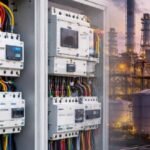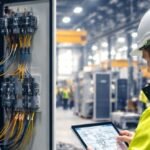
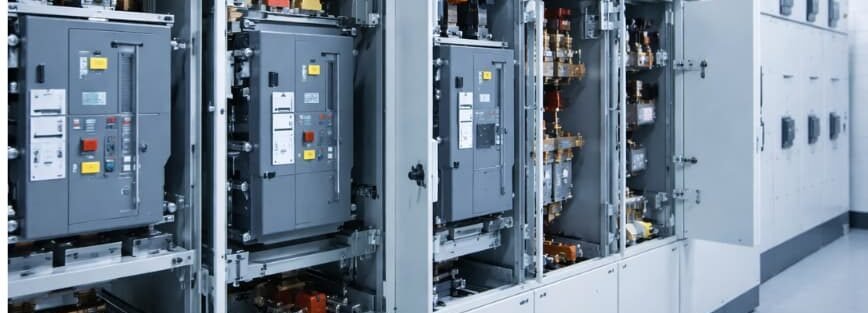
Explore our selection of medium voltage switchgear that is insulated by gas, air, or shielded solid. With AIS, GIS, and 2SIS technologies integrated with industry-leading protection and automation that adds IoT connection to your MV installation, our MV switchgear may be utilized in a wide range of primary or secondary distribution applications.
Medium voltage switchgear
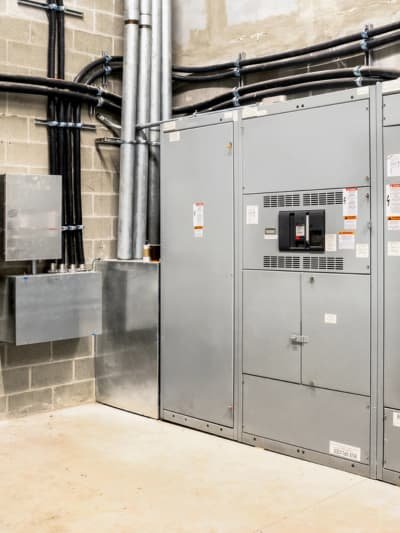
Circuit breakers, fuses, and switches—circuit protection devices—are grouped in electrical switchgear to safeguard, regulate, and isolate electrical equipment. An assembly or line-up of switchgear is a grouping of one or more of these structures.
Switchgear is frequently found in medium- to large-scale commercial or industrial buildings, as well as in electric utility transmission and distribution networks.
Understanding MV Classifications for Jeddah Industries
The process of classifying electrical power systems according to the voltage levels at which they function is known as voltage classification. Electrical systems with the proper safety and performance criteria may be designed, implemented, and maintained with the aid of this categorization. Additionally, it helps to guarantee equipment compatibility and regulatory compliance. Designing and operating electrical systems safely and effectively requires an understanding of MV categories. Applications of the switchgear Jeddah System:
- Large motors, processing equipment, and heavy machinery are all powered by industrial plants.
- Power distribution is the process of attaching substations to infrastructure, business buildings, and industrial facilities.
- Utility networks: delivering power to transformers from substations.
- Large-scale wind and solar farms are examples of renewable energy.
- Transportation & Railways: supplying energy for trams, metros, and electric trains.
Red Sea Industrial Compliance Requirements
Compliance with Saudi Electricity Company (SEC) regulations, namely document 32-TMSS-01, Rev. 03 for 11 kV to 34.5 kV switchgear, is essential for switchgear in the Red Sea industrial region of Jeddah. Design, engineering, manufacturing, testing, and inspection requirements are outlined in these standards. Important Aspects of electrical switchgear Jeddah, MV panels compliance:
● Ranges of Voltage:
With particular uses at 11 kV, 13.2 kV, and 13.8 kV, the most often used medium voltage ranges are 3.3 kV to 36 kV.
● Switchgear Types:
Common types of switchgear include those that are metal-clad, air-insulated, and gas-insulated, and they frequently have fixed or withdrawable breaker modules.
● Parts:
Instrument transformers, control cabinets, protection relays (overcurrent, earth fault, differential), and circuit breakers (SF6, vacuum, or air) are examples of switchgear.
● Features for Safety:
It is crucial to have operator-safe designs, safety shutters, built-in interlocks, and arc flash mitigation.
● Documentation and Testing:
Manufacturers are required to include comprehensive test results, installation and maintenance instructions, manuals, and specialized equipment.
● Criteria:
International standards such as IEC 62271-200 and other pertinent standards such as IEEE, ANSI, ASTM, and IEC must be cited.
● Particular Needs:
The Red Sea region’s climatic characteristics should be taken into consideration while designing and manufacturing the switchgear.
● Saudi Arabian National Grid:
For 11 kV to 34.5 kV metal-enclosed air-insulated switchgear, National Grid Saudi Arabia Transmission Material Standard Specification 32-TMSS-01, Rev. 03, is an essential document.
Note: To ensure safety, dependability, and appropriate operation within the power distribution network, in the Red Sea industrial area must adhere to SEC requirements and pertinent international norms.
Western Region’s MV Switchgear Types
In the Western Region, can be roughly divided into several categories according to its construction, insulation, and intended use. These include switchgear that is metal-clad or enclosed, as well as switchgear that is solid, gas, or air insulated.
Here is a more detailed examination of the types of electrical switchgear in the Western Region, including Jeddah and MV panels:
Type of Insulation
- In air-insulated switchgear (AIS), air serves as the primary insulator.
- Gas-Insulated Switchgear (GIS): Insulates using gas, usually SF6.
- Solid-Insulated Switchgear (SIS): Has solid insulating components for increased portability and safety.
Building
- Because all live parts are enclosed within grounded metal compartments, metal-clad switchgear offers a high level of safety and protection.
- Although metal-enclosed switchgear offers some enclosure for the live components, it might not be as compartmentalized as switchgear that is covered in metal.
- Compact switchgear is made for small areas and frequently has sealed parts.
Use
- Main Distribution: Used to distribute and convert medium voltage switchgear in Jeddah electricity substations.
- Secondary Distribution: Used to distribute electricity to different loads in industrial settings or secondary substations.
- RMUs, or ring main units, are frequently used to connect and switch electricity in a looping pattern in secondary distribution.
Additional Points to Remember
- Switchgear for SF6-Free: A new technique that aims to lessen its influence on the environment by using alternatives to SF6 gas.
- Hybrid switchgear: es many technologies, including GIS and AIS, to maximize cost and performance.
Port and Petrochemical Applications
For Jeddah’s port and petrochemical facilities to run dependably, medium voltage switchgear is essential. For these facilities to manage high power needs and guarantee continuous operation, a strong electrical infrastructure is necessary.
To provide effective power distribution and avoid interruptions, MV switchgear—which normally operates at voltages between 1 kV and 35 kV—is utilized for electrical equipment control, protection, and isolation.
Port electrical switchgear Jeddah, MV panels Applications :
● Distribution of Power:
For several functions, such as cargo handling, lighting, and other necessities, ports need a dependable power source. MV switchgear ensures a steady and dependable supply of energy by distributing power to various parts of the port.
● Protection of Equipment:
Ports use a variety of heavy equipment, such as pumps, cranes, and conveyors, all of which need a lot of power. By protecting these vital pieces of equipment from overloads and short circuits, MV switchgear—which includes features like circuit breakers and fuses—avoids damage and downtime.
● Isolation of Faults:
MV switchgear separates the impacted region in the event of an electrical failure, limiting the impact on other port activities and stopping the problem from spreading. To ensure operational continuity, this is essential.
Petrochemical MV Switchgear Jeddah Applications:
● Elevated Power Requirements:
Similar to refineries and chemical factories, petrochemical facilities need a lot of power for operations like heating, pumping, and operating different types of gear. This power is reliably delivered thanks to MV switchgear.
● Control of the Process:
Complex control systems are frequently used in petrochemical facilities. To guarantee the safe and effective functioning of several processes, such as separation, purification, and reaction, MV switchgear is incorporated into these systems.
● Protection of Hazardous Environments:
Because combustible elements are present, petrochemical settings can be dangerous. Safety and dependability are guaranteed by MV switchgear made for these conditions, which has characteristics like arc-resistant enclosures and explosion-proof designs.
Maintenance in Coastal Environment
Maintaining mv switchgear in a coastal area like Jeddah, where humidity and salt spray are common, calls for extra care to avoid corrosion and guarantee dependable performance. Thorough cleaning, regular inspections, and certain testing protocols are essential. To stop more damage, this entails inspecting for rust, corrosion, and salt deposits and taking quick care of any problems.
Particular Maintenance Techniques of electrical switchgear Jeddah, MV panel in coastal environment:
- Visual Examinations: Check switchgear often for internal and exterior indications of rust, corrosion, and salt buildup. Look for any indications of overheating, broken insulators, and loose connections.
- Cleaning: Use the proper cleaning solutions to get rid of salt buildup and stop corrosion on switchgear parts. After cleaning, make sure everything dries completely to prevent moisture-related issues.
- Testing for Insulation Resistance: To evaluate the insulation’s integrity and spot possible issues early, do routine insulation resistance testing.
- Measurements of Contact Resistance: To guarantee correct functioning and avoid overheating from excessive resistance, measure the contact resistance of circuit breakers and other switching devices.
- Checks of Mechanical Operations: Check that any mechanical parts—such as disconnectors, grounding switches, and circuit breakers—are operating correctly, particularly in coastal areas where humidity may have an impact on how well they work.
- Preservation of the Environment: Using corrosion-resistant materials or applying protective coatings is two ways to shield the switchgear from the harsh coastal environment.
- Particularized Examination: To assess the switchgear’s performance in the presence of salt and humidity, specific testing like as salt fog tests is essential in coastal locations.