

Industrial automation companies in Saudi Arabia should be evaluated by their ability to integrate control systems, monitoring platforms, field devices, and operational requirements into a reliable, maintainable solution. For industrial facilities, selecting a suitable automation provider requires more than checking hardware availability: engineering teams should assess system architecture, PLC and SCADA integration, HMI development, commissioning procedures, documentation quality, cybersecurity considerations, and long-term technical support. For plants upgrading existing equipment or implementing new automation systems, the right evaluation process helps identify integration risks before installation, define clear acceptance criteria, and support reliable operation throughout the system lifecycle.
What Do Industrial Automation Companies in Saudi Arabia Actually Provide?
Industrial automation companies support the design, integration, implementation, and maintenance of systems that monitor and control industrial processes. Depending on the project scope, services may include PLC programming, SCADA integration, HMI development, industrial communications, control panel integration, commissioning, troubleshooting, and lifecycle support. The scope varies between providers. Some focus primarily on supplying equipment, while others undertake engineering design, application development, system integration, and commissioning. Industrial buyers should distinguish between these capabilities before shortlisting potential providers.
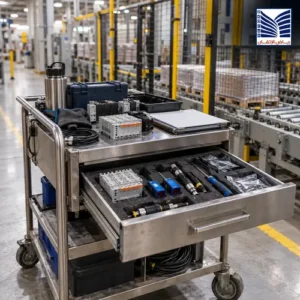
PLC Programming and Control Integration
Programmable logic controllers (PLCs) execute control logic for machinery, production lines, utilities, and industrial processes. A suitable provider should understand:
- Control sequences and interlocks.
- Digital and analogue input/output requirements.
- Instrument signal mapping.
- Alarm and fault handling.
- Communication with drives and other controllers.
- Program documentation and version management.
For projects requiring controller selection or integration, reviewing available programmable logic controller solutions can help establish the technical scope before finalizing system requirements.
SCADA Systems and HMI Development
Supervisory Control and Data Acquisition (SCADA) systems provide supervisory monitoring, data acquisition, alarms, and operational visibility across industrial equipment and processes. Human-Machine Interface (HMI) applications provide operators with graphical access to equipment status, process variables, alarms, and control functions. A provider’s capabilities may include:
- SCADA architecture design.
- HMI screen development.
- Alarm configuration.
- Historical data collection.
- Trend visualization.
- PLC communication.
- Operator access management.
- Integration with existing industrial systems.
When evaluating a SCADA system integrator in Saudi Arabia, confirm whether the provider can work with the existing control architecture or whether the project requires a broader system redesign.
How to Evaluate an Industrial Automation Provider
A structured evaluation helps engineering teams compare technical capabilities rather than relying on broad marketing statements.
1. Review Engineering Depth
The provider should be able to explain how the proposed system will meet the plant’s operating requirements. Ask for a clear description of:
- The control philosophy.
- System architecture.
- Controller and communication requirements.
- Input/output allocation.
- Alarm and interlock handling.
- Failure responses.
- Integration boundaries.
The provider should identify assumptions and unresolved engineering questions instead of treating incomplete information as confirmed design data.
2. Verify Integration Capability
Industrial automation projects often involve equipment from multiple manufacturers and generations. Compatibility cannot be assumed simply because two devices support industrial communications. The engineering review should consider:
- Supported protocols.
- Firmware and software versions.
- Data types and addressing.
- Communication timing.
- Network architecture.
- Interface limitations.
- Behaviour during communication loss.
For a plant retaining existing PLCs while introducing a new SCADA platform, the integration scope should define which system owns each signal, command, alarm, and interlock.
3. Assess HMI Development Quality
A well-designed HMI should help operators understand process conditions quickly and respond appropriately to abnormal events. Evaluate whether the provider can deliver:
- Consistent screen navigation.
- Clear equipment status indications.
- Meaningful alarm priorities.
- Useful trends and historical records.
- Appropriate operator permissions.
- Clear distinction between commands and status feedback.
The design should reflect the process and the operator’s responsibilities, not merely reproduce the appearance of existing screens.
4. Examine Commissioning and Testing Procedures
Commissioning should verify the complete control chain, from field signals to controller logic and operator displays. The proposed test scope should identify how the project will verify:
- Input/output mapping.
- Control sequences.
- Interlocks and permissives.
- Alarm generation and acknowledgement.
- Communication failure handling.
- HMI command execution.
- Data logging.
- Recovery after a restart, where applicable.
Acceptance criteria should be agreed before testing begins.
What Should a SCADA/HMI Integration Project Include?
A clearly defined project scope helps prevent gaps between hardware supply, application development, installation, and commissioning.
| Project Element | What to Verify |
|---|---|
| Requirements | Process functions, operating modes, and performance expectations. |
| System architecture | PLCs, SCADA servers, HMIs, networks, and interfaces. |
| I/O and tag database | Signal names, addresses, scaling, and descriptions. |
| HMI development | Screen layouts, navigation, alarms, and trends. |
| Communications | Protocols, addressing, network dependencies, and failure handling. |
| Cybersecurity | Access permissions, account management, and remote-access controls. |
| Testing | Approved test cases, expected results, and recorded evidence. |
| Handover | Backups, drawings, configuration files, and operating documentation. |
This checklist can be adapted to new installations, brownfield upgrades, and modernization projects.
How Should Industrial Automation Projects Be Tested?
A reliable testing process verifies that the system performs the intended functions under normal and abnormal operating conditions. A typical project sequence is:
- Requirements and design review: Confirm control philosophy, interfaces, and acceptance criteria.
- Configuration and application checks: Review PLC logic, SCADA tags, HMI screens, and communications.
- Functional testing: Verify signals, sequences, alarms, interlocks, and fault responses.
- Site commissioning: Confirm field interfaces and operation under approved site conditions.
- Handover and baseline backup: Deliver verified configurations, test reports, and updated documentation.
The precise sequence depends on the project, plant operating constraints, and approved commissioning plan. Safety-critical functions must be tested under controlled procedures by appropriately qualified personnel.
What Commissioning Evidence Should Buyers Request?
Before accepting the system, request evidence appropriate to the agreed scope, including:
- Approved functional test procedures.
- Completed test records and outstanding issue lists.
- I/O and communication test results.
- Alarm and interlock verification.
- Configuration and software backups.
- Updated drawings and tag lists.
- Operator and maintenance documentation.
- Final acceptance and handover records.
These deliverables support future troubleshooting and reduce dependence on undocumented knowledge held by individual personnel.
Common Mistakes When Selecting Industrial Automation Companies
Choosing Based on Equipment Supply Alone
Equipment availability does not establish whether a provider can configure, integrate, test, and support the complete system. Buyers should verify that the proposed scope covers the required engineering and commissioning activities.
Underestimating Legacy-System Integration
Older PLCs, proprietary protocols, obsolete software, and incomplete drawings can complicate modernization. A site assessment should identify these constraints before the final design is approved.
Leaving Responsibilities Undefined
Projects can encounter delays when ownership of wiring, programming, network configuration, testing, or third-party interfaces is unclear. Define responsibilities for the owner, integrator, equipment suppliers, and other contractors in a responsibility matrix.
Ignoring Cybersecurity and Access Management
Automation systems should be designed with appropriate access controls and operational boundaries. Review user permissions, remote access, backup protection, and change management as part of the project scope. Where vendor support is required, define who may connect, how access is approved, what activities are permitted, and when access must be removed.
Accepting Incomplete Documentation
A system that operates during initial commissioning can still be difficult to maintain if its configuration files, drawings, and software versions are not properly handed over. Documentation should be treated as a formal project deliverable, not an optional administrative task.
Lifecycle Support: What Happens After Commissioning?
Industrial automation systems require ongoing maintenance as equipment changes, software environments evolve, and operational requirements develop. When comparing providers, ask how post-commissioning support is organized. Important considerations include:
- Troubleshooting procedures.
- Availability of qualified technical support.
- Backup and restoration practices.
- Version and configuration management.
- Spare hardware considerations.
- Software licensing and compatibility.
- Support for future expansion.
- Documentation updates after modifications.
A lifecycle support plan should distinguish between routine maintenance, corrective troubleshooting, application changes, and major system upgrades. Buyers should also clarify which activities are included in the agreed scope and which require separate authorization.
When Should a Saudi Industrial Facility Seek Automation Integration Support?
A technical assessment may be appropriate when a facility is:
- Installing a new SCADA or HMI platform.
- Replacing obsolete controllers.
- Integrating equipment from different manufacturers.
- Experiencing recurring communication failures.
- Improving alarm management and process visibility.
- Expanding production capacity.
- Modernizing an existing control room.
- Preparing for a planned automation upgrade.
The assessment should document the current architecture, identify operational constraints, and define measurable project requirements before equipment selection.
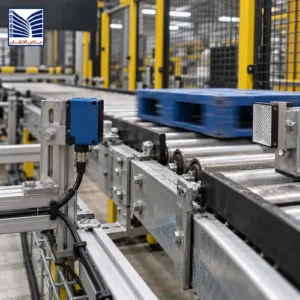
Request a SCADA/HMI Consultation
Selecting among industrial automation companies in Saudi Arabia requires a practical assessment of engineering depth, integration capability, commissioning quality, and lifecycle support. Before requesting a proposal, prepare the available system drawings, controller and software details, I/O lists, communication requirements, and a summary of the operational challenges. This information helps define the scope and identify questions that must be resolved before implementation. For a technical discussion about SCADA/HMI integration, development, or support, use the SCADA/HMI solutions page or contact the technical team to request a consultation and quotation.
Frequently Asked Questions
What should I look for when evaluating industrial automation companies in Saudi Arabia?
Evaluate the provider’s ability to understand the process, design the control architecture, integrate PLCs and SCADA, develop usable HMI applications, perform structured commissioning, and provide maintainable documentation. Ask for a clearly defined scope, acceptance criteria, responsibility matrix, and lifecycle support plan. Technical evidence is more useful than unsupported claims about experience or capability.
What is the difference between a PLC supplier and a SCADA system integrator?
A PLC supplier primarily provides programmable controllers and related equipment, although its services may extend further. A SCADA system integrator typically handles supervisory architecture, tag configuration, communications, visualization, alarms, historical data, and integration with controllers. Some providers deliver both, but buyers should confirm the specific engineering and commissioning responsibilities included in the proposal.
What do HMI development services include?
HMI development may include screen design, navigation, equipment status displays, alarm presentation, trends, operator commands, and user access configuration. The exact scope depends on the process and operational requirements. A good specification should define how screens, alarms, and commands behave, along with testing and documentation requirements.
How can I assess a SCADA supplier in Riyadh?
Ask the supplier to explain the proposed architecture, supported protocols, integration boundaries, testing process, cybersecurity controls, and handover deliverables. Confirm that the supplier can work with the plant’s existing hardware and software where required. A technical assessment should identify compatibility constraints before the project scope and implementation plan are finalized.
What documentation should be provided after SCADA commissioning?
Depending on the agreed scope, documentation should include system architecture, updated drawings, tag and I/O lists, software and configuration backups, test reports, alarm configuration, communication settings, and operating instructions. The handover package should identify software versions and outstanding issues so maintenance teams can manage the system after commissioning.
Why is lifecycle support important for industrial automation?
Lifecycle support helps maintain system availability and manage changes after commissioning. It may cover troubleshooting, backups, configuration updates, spare parts planning, software compatibility, and future expansion. Buyers should clarify response arrangements, documentation responsibilities, and the boundaries of ongoing support before selecting a provider.
Can an existing PLC be integrated with a new SCADA system?
Often, an existing PLC can be integrated with a new SCADA system, but compatibility must be verified. Engineers should review the controller model, firmware, communication protocols, available data, addressing, network design, and required control functions. Legacy hardware or proprietary interfaces may require additional engineering or an alternative integration approach.
How should an industrial automation project define acceptance?
Acceptance should be based on agreed requirements and documented test results. Criteria may cover control sequences, I/O mapping, alarms, interlocks, communications, data logging, recovery behavior, and handover documentation. The criteria should be defined before commissioning so that the owner and integrator share the same understanding of successful completion.