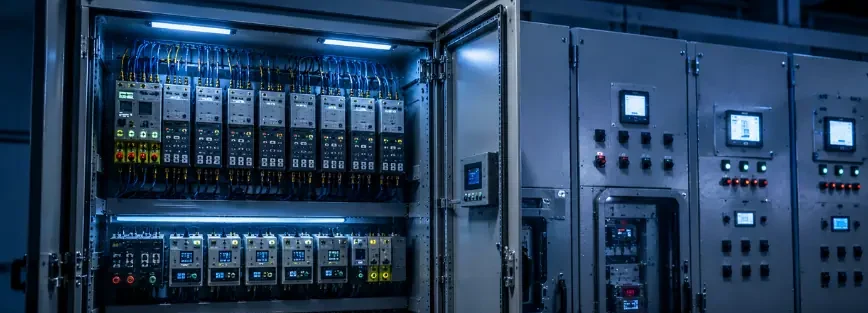
Electrical protection systems in Dammam are essential for ensuring the safety and reliability of industrial power networks, especially in petrochemical facilities. These systems detect electrical faults, isolate affected areas, and help maintain continuous operation while preventing equipment damage and hazards. In complex industrial environments, relay coordination and protection studies play a key role in improving system performance and safety.
Electrical Protection Systems in Dammam: Design and Operation
Electrical protection systems are designed to ensure the safety and reliability of industrial power networks by continuously monitoring electrical conditions and isolating faults when they occur. These systems play a vital role in maintaining uninterrupted power supply across industrial facilities.
When abnormal conditions such as overcurrent, short circuits, or ground faults are detected, protective devices like circuit breakers, fuses, and relays respond instantly to disconnect the affected part of the system. This fast and coordinated action helps reduce downtime, prevent equipment damage, and improve overall electrical safety in industrial environments.
Read About: Mastering Excitation and Synchronization Solutions: Guide
Protection Fundamentals for Oil & Gas Sector
- Overall Protection Concept
Protection fundamentals for the oil and gas sector focus on ensuring the safety and reliability of industrial electrical systems, especially in petrochemical environments where faults can lead to serious operational and safety risks. - Safety Management Systems (SMS)
Safety management systems are implemented to identify hazards, control risks, and ensure safe operations through structured procedures, guidelines, and preventive safety measures. - Personal Protective Equipment (PPE)
PPE is used to protect workers from electrical, mechanical, thermal, and chemical hazards, and must be properly selected and applied based on job requirements. - Emergency Preparedness and Response
Emergency plans are developed to handle incidents such as electrical faults, fires, spills, or evacuations, ensuring fast and controlled response during critical situations. - Risk Management in Oil & Gas Operations
Risk management processes are applied to identify, assess, and control hazards across all stages of operations, including exploration, drilling, production, transportation, and storage. - Operational Safety Practices
Operational safety ensures that both routine and non-routine activities are performed safely through proper procedures, training programs, and compliance with safety standards. - Control and Protection Systems
Control and protection systems continuously monitor industrial processes and automatically detect and isolate electrical faults to maintain system stability and safety. - Lone Worker Safety Measures
Lone worker safety involves protective procedures and monitoring systems to ensure the safety of employees working in remote or isolated areas. - Competency and Training Programs
Training and competency development ensure that workers understand operational risks and are properly trained in safety procedures, PPE usage, and emergency response. - Continuous Improvement
Continuous improvement in electrical protection systems involves regular audits, system evaluations, and learning from incidents to enhance safety and operational reliability.
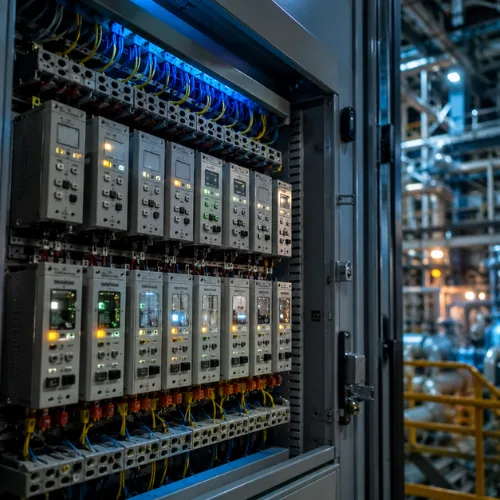
Types of Relays for Hazardous Areas
- Role of Protective Relays in Industrial Areas
In Dammam, protective relays are widely used in electrical protection systems to ensure safe and reliable operation in hazardous industrial environments. These relays help detect faults early and prevent electrical failures from escalating into major system disruptions. - Overcurrent Protection Relays
Overcurrent relays detect abnormal current levels caused by overloads or short circuits and activate protective actions such as tripping circuit breakers to isolate the faulty section of the system. - Instantaneous Overcurrent Relays
These relays provide very fast protection by operating immediately when the current exceeds a preset limit, ensuring rapid response to severe fault conditions. - Inverse Time Overcurrent Relays
Inverse time relays operate based on both the magnitude and duration of the fault current, allowing faster tripping at higher current levels for better system coordination. - Motor Protection Relays
Motor protection relays are designed to protect electric motors from overloads, short circuits, and phase imbalance, helping to improve equipment reliability and operational lifespan. - Thermal Overload Relays
Thermal overload relays protect motors from overheating caused by prolonged excessive current by monitoring thermal effects and preventing equipment damage. - Distance, Impedance, and Reactive Relays
Distance relays use impedance measurement to determine fault location and ensure selective tripping, while impedance and reactive relays help improve fault detection accuracy in complex systems. - Importance of Relays in Hazardous Environments
Protective relays are critical in hazardous areas as they help prevent fires and explosions by quickly isolating fault currents, protecting equipment, and maintaining system stability. - Application Considerations in Hazardous Areas
Relay selection and configuration depend on the type of application, equipment being protected, and compliance with industrial safety standards and regulations.
Coordination Studies for Petrochemical Plants
- Importance of Coordination Studies in Petrochemical Systems
In petrochemical facilities such as those in Dammam, coordination studies are essential for ensuring the reliability and safety of electrical protection systems. These studies help achieve selective fault isolation and minimize downtime during electrical disturbances. - Fault Analysis in Electrical Networks
Fault analysis involves identifying possible short circuit and overload scenarios within the electrical distribution system to determine their impact and select appropriate protection strategies. - Selection of Protective Devices
Based on fault analysis results, suitable protective devices such as relays, circuit breakers, and fuses are selected to ensure proper system protection and performance. - Protection Coordination Strategy
Coordination studies ensure that only the protective device closest to the fault operates, while other upstream devices remain unaffected, improving system selectivity and stability. - Use of Electrical Simulation Software
Advanced coordination studies often rely on specialized software such as ERACS to model electrical systems and optimize protection settings in complex industrial networks. - Benefits of Coordination Studies
Coordination studies improve system reliability, enhance safety, reduce operational costs, and ensure compliance with industrial protection standards and regulations. - Why Coordination Studies Are Critical in Dammam Petrochemical Industry
Due to the complexity of electrical systems, presence of hazardous materials, and continuous operation requirements, coordination studies are vital to maintaining safe and uninterrupted industrial performance in Dammam.
Arc Flash Analysis in ARAMCO Standards
- Importance of Arc Flash Analysis in Industrial Electrical Systems
Arc flash analysis in Dammam’s industrial facilities, especially within ARAMCO standards, is a critical process for ensuring worker safety and reducing electrical hazards in complex power systems. - Compliance with International and ARAMCO Standards
This analysis follows key standards such as IEEE 1584, NFPA 70E, and ARAMCO General Instruction G.I. 2.721 to ensure proper hazard assessment and safety compliance. - Incident Energy Calculation
Incident energy analysis determines the level of thermal energy released during an arc flash event, which is essential for evaluating the severity of potential hazards. - Arc Flash Boundary Determination
Arc flash boundaries define safe working distances around electrical equipment, helping to protect personnel from exposure to dangerous energy levels. - Personal Protective Equipment (PPE) Selection
The study identifies the appropriate PPE required for different tasks and risk levels to ensure maximum protection for electrical workers. - Risk Assessment and Hazard Evaluation
Arc flash analysis is part of a broader risk assessment process that identifies potential electrical hazards and helps implement mitigation measures. - Coordination with Protection Studies
Arc flash analysis is closely linked with overcurrent and short-circuit coordination studies to ensure protective devices operate effectively and reduce fault duration. - Importance in Dammam Industrial Sector
In Dammam’s oil, gas, and industrial facilities, arc flash studies are essential due to complex electrical systems, hazardous environments, and strict safety requirements. - Benefits of Arc Flash Analysis
Arc flash studies enhance worker safety, reduce equipment damage, and ensure compliance with ARAMCO and international electrical safety standards.
Testing Procedures for Industrial Complexes
- Importance of Testing Electrical Protection Systems:
Testing procedures in Dammam industrial complexes are essential for ensuring the reliability and safety of electrical protection systems. These tests help verify that all equipment operates correctly under normal and fault conditions. - Visual Inspection of Electrical Systems:
Visual inspections involve checking electrical installations for signs of wear, corrosion, loose connections, or incorrect wiring to detect potential issues early. - Insulation Resistance Testing:
This test measures the insulation quality of electrical cables and equipment to ensure they can safely withstand operating voltages without leakage or failure. - Circuit Breaker Testing:
Circuit breaker testing evaluates the performance of trip mechanisms, contact resistance, and overall switching operation to ensure proper fault interruption. - Continuity Testing:
Continuity testing verifies that electrical pathways and connections are complete and functioning correctly, ensuring uninterrupted current flow where required. - Functional Testing of Protection Systems:
Functional tests confirm that protection devices and safety systems operate correctly under different operating and fault scenarios. - High Voltage Cable Testing:
High voltage cables are tested to assess insulation integrity and ensure safe operation under high electrical stress conditions. - Primary Injection Testing:
Primary injection testing is used to verify the correct operation of protective relays by injecting current directly into the primary circuit. - Transformer Testing:
Transformer testing includes checks such as winding resistance, insulation resistance, and turns ratio to ensure proper performance and reliability. - Lightning Protection System Testing:
Lightning protection systems are tested through visual inspection and continuity testing to ensure effective protection against lightning strikes.
Key Considerations for Electrical Protection Systems in Dammam
- Environmental Conditions Impact
The hot and humid climate in Dammam can significantly affect electrical protection systems and equipment performance. Factors such as heat, moisture, and corrosion risk must be considered during system design, installation, and testing to ensure long-term reliability. - Hazardous Area Requirements
Certain zones within industrial complexes in Dammam are classified as hazardous due to the presence of flammable materials or explosive atmospheres. These areas require strict compliance with safety regulations and specialized protection and testing procedures, especially for systems such as lightning protection and electrical installations.
Conclusion
Electrical protection systems in Dammam play a vital role in ensuring the safety, reliability, and efficiency of industrial power networks, particularly in petrochemical and oil and gas facilities. Through proper relay coordination, arc flash analysis, testing procedures, and well-designed protection strategies, industrial systems can operate with reduced risk of faults, downtime, and equipment damage.
As industrial environments become more complex, the importance of advanced protection studies continues to grow. Implementing international standards, continuous monitoring, and regular system evaluations ensures safer operations and improved performance across all electrical networks in hazardous industrial areas.