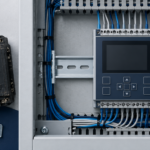

This Saudi-based automation engineering team designs, integrates, commissions, and supports WinCC SCADA integrator Saudi Arabia and HMI systems for industrial facilities across Saudi Arabia. For plants already aligned to that platform, the best integrator is usually the one that can prove compatibility, engineering depth, commissioning discipline, and long-term support rather than simply offering the lowest quote. The local service pages describe SCADA/HMI integration, PLC engineering, HMI design, startup and commissioning, remote and on-site troubleshooting, and upgrade support, while official product pages position WinCC Unified as a future-ready HMI platform for panel-, edge-, and PC-based operation and control.
Why a brand-specific WinCC SCADA integrator Saudi Arabia project needs a different buying process
A WinCC SCADA integrator Saudi Arabia project is not just a software purchase. It is an architecture, engineering, diagnostics, and lifecycle decision. Official product pages state that WinCC Unified Engineering is used to create visualizations from a single machine up to an entire plant, and that WinCC Unified PC can act as an integration platform using standardized interfaces such as OPC UA and GraphQL. That means the right integrator should be evaluated on how well it handles the whole operating environment, not only screen design.
It also matters to confirm which WinCC branch fits the plant. Official Siemens SCADA pages show that the portfolio includes WinCC Unified, WinCC V8, and WinCC OA, with WinCC OA positioned for larger-scale and more customized SCADA applications. A strong SCADA system integrator Saudi Arabia buyer shortlist should therefore clarify whether the project is really a WinCC Unified project, a classic SCADA runtime expansion, or a larger OA-style architecture before the quotation stage.

What to check before requesting a quotation
1) Platform fit and system architecture
Before asking for a quotation, confirm the exact platform branch, engineering version, runtime architecture, and operator environment. Official overview and manuals pages for WinCC Unified exist specifically to collect the most important manuals, installation details, and update links for engineering, PC runtime, and Unified Comfort Panels. That is a clear sign that version and architecture fit are core project inputs, not late-stage details.
For local project scoping, it is sensible to start from SCADA and HMI monitoring solutions and then confirm how the SCADA layer will connect to PLC solutions. The local service pages show those two scopes are already linked through engineering, HMI design, commissioning, and troubleshooting support.
2) Compatibility and lifecycle fit
A brand-led project should always check compatibility before final approval. Siemens provides an official Compatibility Tool that can be used to select compatible software products or verify compatibility between automation and drive technology components. That makes compatibility a formal engineering step, not a guess based on experience alone.
Lifecycle fit also includes operating-system and installation prerequisites. Siemens’ WinCC Unified support material includes a specific document for required Windows features, which is a practical reminder that a SCADA project can fail at startup if the engineering PC or runtime host is not prepared correctly. A reliable SCADA supplier Riyadh shortlist should therefore be able to confirm supported versions, required Windows components, and update paths before any site work begins.
3) Diagnostics and operator visibility
A good integrator should treat diagnostics as part of the design, not as an afterthought. Siemens support pages show that WinCC Unified has dedicated system-diagnostics objects and controls that can display PLC diagnostic status, and the WinCC Unified system manual includes diagnostics functions, users and roles, and connectivity as built-in topics. That means a strong integrator should be able to define fault visibility, operator alarms, and user-role behavior before commissioning, not after operators begin reporting blind spots.
That is one reason related internal references like SCADA troubleshooting and PLC not communicating are useful during buyer evaluation. They reflect the real kinds of cross-layer issues that appear when SCADA and PLC integration is weak.
4) PLC and field integration depth
A WinCC integrator should not be evaluated as a screens-only contractor. The local PLC page explicitly lists PLC engineering, SCADA engineering, HMI design, startup and commissioning, remote and on-site support, troubleshooting, and upgrades. That means a stronger PLC SCADA integration company Saudi Arabia partner should be able to handle controller communication, tag structure, diagnostics paths, and startup validation, not only HMI graphics.
5) Security and controlled change
A SCADA platform should also be evaluated through an OT-risk lens. NIST SP 800-82r3 covers operational technology security, architecture, threats, and recommended countermeasures for DCS, SCADA, and related control environments. In practical terms, that means the right integrator should be able to explain remote-access control, user-role design, update handling, backup and restore strategy, and how emergency changes are documented.
For plants where remote visibility and industrial monitoring are already critical, it is also reasonable to review SCADA security best practices before finalizing the integrator scope.
Commissioning scope should be one of the main buying criteria
A WinCC project is not proven when the runtime opens for the first time. It is proven when tags, alarms, diagnostics, communications, operator roles, and startup workflows all behave correctly in service. The local monitoring and PLC pages explicitly include commissioning and startup support, while the WinCC Unified manuals and diagnostics documents show that runtime diagnostics, connectivity, and user-role behavior are part of the platform itself. That means commissioning scope should include tag validation, alarm checks, diagnostics checks, communication testing, user-rights verification, and final as-left backups.
A practical supporting reference here is pre-commissioning checklist for instrumentation, because a SCADA/HMI project often depends on field readiness just as much as on software readiness.
Documentation quality will decide how supportable the project becomes later
A technically strong project should leave behind more than a working runtime. It should leave a usable project archive, tag list, alarm philosophy, communication map, user-role structure, diagnostics setup, and a clear record of as-left changes. The official WinCC Unified overview and manuals/update pages exist because these systems depend on controlled documentation, supported installations, and known update paths. A supplier that cannot define its documentation deliverables clearly is unlikely to make future changes easy for the plant team.
This is where brand-led lifecycle support becomes important. If the plant uses Unified Comfort Panels, PC runtime, or broader WinCC-based monitoring, the integrator should be able to say exactly how backups are stored, how future updates are checked for compatibility, and how the plant can avoid version drift across engineering and runtime stations. The official Compatibility Tool and manuals/update references make those lifecycle questions part of normal engineering practice.
A practical buyer checklist for Saudi industrial teams
Before choosing a WinCC SCADA integrator Saudi Arabia plants can trust, confirm five things. First, the integrator has identified the correct WinCC branch for the job. Second, the integrator can verify compatibility across runtime, engineering, PLC, and panel layers. Third, the integrator has a clear commissioning method for diagnostics, alarms, and communications. Fourth, the integrator can document backups, versions, and user-role design properly. Fifth, the integrator can support the project after startup with controlled change and troubleshooting support.
That same checklist is usually more useful than comparing suppliers only by screen count, quoted engineering hours, or headline software labels.

FAQ
What should industrial buyers compare first when choosing a WinCC integrator?
Start with platform compatibility, engineering depth, diagnostics capability, commissioning scope, and post-startup support. Those factors affect long-term reliability and usability more directly than price alone.
Why does WinCC compatibility matter so much?
Because Siemens provides official tools and support documents specifically for compatibility checks, required Windows features, and manuals and updates. That shows compatibility is a formal technical requirement, not just a convenience.
Why should diagnostics be part of the buyer evaluation?
Because official WinCC Unified documentation includes system diagnostics controls and objects for monitoring PLC diagnostic status, which means fault visibility depends on good integration design.
Should the PLC supplier and SCADA integrator be reviewed together?
Often yes. The local PLC and monitoring pages show overlapping engineering, HMI design, startup, troubleshooting, and support scope, which is exactly why many industrial projects work better when the PLC and SCADA layers are evaluated together.
If your plant needs a WinCC SCADA integrator Saudi Arabia teams can trust for integration, development, or support, start with SCADA and HMI monitoring solutions, align the controller layer through PLC solutions, and use contact the automation team to request a SCADA/HMI consultation and quotation.