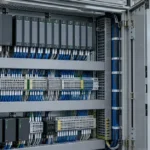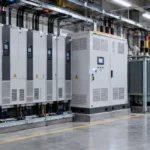
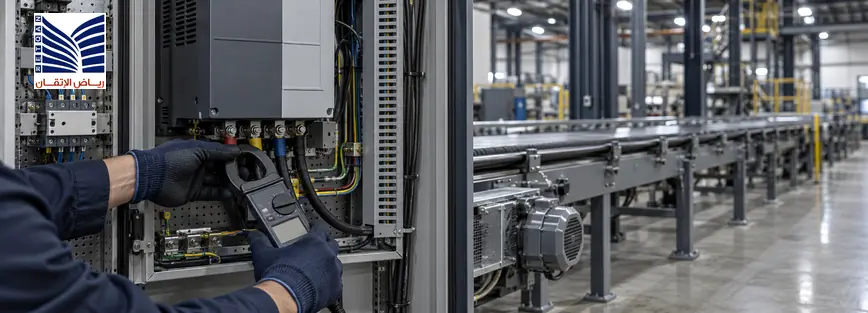
For industrial facilities in Saudi Arabia, VFD troubleshooting Saudi Arabia teams can rely on should start with a disciplined sequence: verify safety and stored energy, confirm supply and grounding, review alarms and parameters, inspect motor-side wiring, and only then decide whether the issue is a settings problem, an installation problem, or a deeper motor-and-drive system fault. Manufacturer guidance consistently treats VFD troubleshooting as a structured process tied to safe isolation, correct grounding, correct cable installation, and fault-code review rather than guesswork.
That matters because many recurring VFD failures are not caused by the drive hardware alone. Repeated trips often come from loose input wiring, grounded motor phases, cable and EMC problems, poor cooling, wrong parameters, or installation details that were missed during startup. Field guidance from major drive manufacturers explicitly tells technicians to check broken or loose input connections, verify motor wiring, verify the motor itself, confirm grounding, separate control and power cables, and avoid power-correction capacitors on the motor cable.
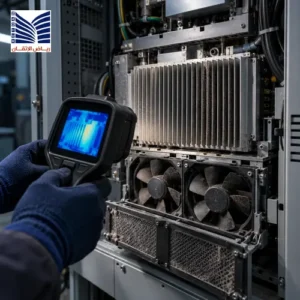
What to check first before touching the drive
Before any inspection or electrical work, make the drive safe. Drive terminals and internal components can retain dangerous voltage after disconnection, and the motor or other connected sources may also introduce voltage. Qualified personnel should isolate all relevant energy sources, apply lockout/tagout, wait the full discharge time specified in the operating manual for the exact drive model, and verify absence of voltage using an appropriately rated measuring device before touching terminals. Do not assume that five minutes is sufficient for every drive. Control terminals and externally supplied circuits must also be checked.
After safety isolation, the first technical check is usually the simplest one: look at the fault text, event history, and operating state before changing anything. A service-first approach works best here because random resets can erase useful clues. On-drive fault guidance from Rockwell shows that even relatively simple faults such as analog-input loss, output phase loss, or phase-to-ground faults have specific diagnostic paths tied to wiring, parameters, and motor condition rather than one universal fix.
Common VFD issues and what they usually point to
1) The VFD powers up, but the motor does not start
If the drive is energized but the motor does not run, the first checks should be start command logic, control wiring, I/O state, and whether the drive is actually in a run-enabled condition. Manufacturer guidance also warns that changes to parameters, applications, or software can change I/O behavior, including start inputs, and can even create an accidental-start risk if the system is not checked carefully after changes. That is why a “not starting” complaint is often a control-path issue before it is a power-stage issue.
For plants that want a faster first-pass checklist, the most useful supporting pages are VFD solutions, VFD not starting motor, and how to select a VFD for a motor, because the root cause is often a mismatch between control expectations, selected parameters, and the connected load.
2) Overcurrent trips during start or acceleration
Overcurrent trips usually tell you to look at the motor side, the load, and the acceleration settings before assuming the drive itself is damaged. Rockwell troubleshooting guidance ties phase faults and short conditions to wiring between the drive and the motor and to the motor itself, while broader drive manuals also link nuisance trips to parameter choices and application configuration. In practice, repeated overcurrent at startup often points to a short acceleration ramp, a jammed or high-inertia load, incorrect motor data, or an actual wiring or insulation problem downstream of the drive.
This is where VFD tripping on overcurrent and what causes a VFD to trip become useful internal checkpoints for maintenance teams trying to separate parameter problems from motor-side faults.
3) Undervoltage, DC-bus, or unstable restart behavior
Some drives can be configured to attempt automatic reset after certain faults, but that does not remove the need to fix the real cause. ABB firmware guidance notes that drives can automatically reset after overcurrent, overvoltage, and undervoltage faults when automatic reset is enabled, while Danfoss safety guidance warns that auto reset and active start signals can cause the motor to restart automatically after a fault reset. In plant conditions, that means unstable restart behavior is both a reliability issue and a safety issue.
If a site has unexplained DC-bus alarms or repeated undervoltage behavior, the right next step is usually to check incoming supply quality, braking behavior, DC-bus condition, and restart logic together rather than clearing alarms one by one.
4) Ground fault, phase-to-ground, or insulation-related alarms
Rockwell’s fault guidance explicitly states that phase-to-ground faults should drive checks of the wiring between the drive and motor and checks for a grounded motor phase. That makes these alarms more serious than routine nuisance trips, because they may indicate cable damage, motor insulation failure, moisture ingress, or an actual output-stage issue. If the fault does not clear after motor and cable verification, the manufacturer guidance explicitly allows for the possibility that the drive itself may need replacement or deeper repair action.
When that kind of fault appears repeatedly, the problem has moved beyond simple operator troubleshooting. It becomes a diagnostic job that may require insulation testing, cable-route review, and deeper motor condition assessment through the connected industrial electric motors scope. Before insulation-resistance testing, isolate and disconnect the motor and cable from the drive as required by the manufacturer; do not apply an insulation tester through the drive electronics.
5) Communication loss, analog signal loss, or unstable control response
Not every VFD issue is a power issue. Rockwell’s on-drive troubleshooting guidance shows that analog-input-loss faults can be caused by broken or loose input connections or by parameter configuration, which is a good reminder that sensor circuits, PLC signals, and commissioning data all affect how the drive behaves in service. A drive that “runs badly” may actually be receiving bad references, unstable feedback, or the wrong loss-of-signal behavior from the configuration.
That is also why installations tied into SCADA, BMS, or process control systems should be checked as complete control chains rather than as isolated drive cabinets.
Installation-related causes that should be checked early
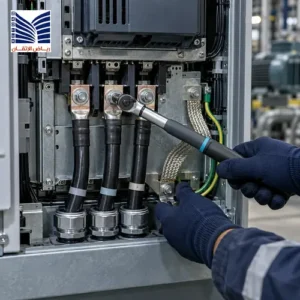
Good troubleshooting always revisits installation basics. Danfoss commissioning guidance instructs technicians to confirm that the drive and motor are grounded, that control cables are kept as far as possible from power cables, that cable shields are terminated correctly, that terminal torques are checked, and that no power-correction capacitors are connected to the motor cable. The same guidance says technicians should confirm cooling-air quality and quantity and verify that there is no condensation on the drive surfaces before commissioning.
Those points matter in Saudi industrial environments because heat, dust, and panel contamination can turn a marginal installation into a recurring-fault installation. In real projects, “troubleshooting” often ends up revealing a commissioning or installation weakness. That is why VFD installation requirements and VFD preventive maintenance checklist are often more useful than simply swapping parts.
Risk indicators that mean the issue is no longer routine
A maintenance team should stop treating the problem as routine and escalate when any of these signs appear repeatedly: repeated ground-fault or phase-to-ground alarms, unexplained overcurrent after parameter review, overheating linked to poor cooling or contamination, automatic restarts that create unsafe machine behavior, visible cable or terminal damage, or recurring faults after parts have already been replaced. Manufacturer guidance is clear that some conditions can create accidental motor start or point to deeper electrical faults rather than settings alone.
Another strong escalation trigger is uncertainty about what changed. If parameters, applications, firmware behavior, or I/O functions were modified and the current as-left record is not reliable, the safest path is usually a controlled engineering review rather than more trial-and-error resets. Danfoss application guidance explicitly frames troubleshooting as a qualified-person task tied to configuration, programming, and safe use of the drive.
When to bring in a specialist team
A specialist team should be brought in when the fault may involve the full drive system rather than only the drive. That includes repeated motor-side electrical faults, harmonics or EMC-related symptoms, unresolved commissioning issues, long cable runs, unclear motor compatibility, and cases where installation quality is now part of the suspected cause. Technical guidance on VFD selection, installation, and safe operation consistently shows that the drive, motor, cabling, grounding, and control logic must be treated as one engineered system.
That is also the point where a service-led approach adds the most value. A specialist team can review sizing, motor data, load behavior, wiring practice, control signals, and startup logic together instead of troubleshooting each symptom in isolation. For many facilities, that is the difference between clearing one alarm and actually restoring reliability.
Practical decision path for Saudi industrial sites
A practical service decision path looks like this: first, secure the equipment and verify safe isolation; second, capture the fault and recent change history; third, inspect wiring, grounding, cooling, and control inputs; fourth, review motor compatibility and parameter logic; fifth, escalate if the fault involves repeated power-stage trips, grounding issues, unstable restart behavior, or unresolved commissioning errors. That sequence follows the same logic seen in current manufacturer documentation and is much more reliable than immediately replacing the drive on the first visit.
FAQ
What should be checked first in VFD troubleshooting?
Safety isolation, stored voltage, fault history, wiring condition, grounding, and the actual fault text should be checked before parameters are changed or components are replaced.
Can a VFD restart automatically after a fault?
Yes, depending on settings. Manufacturer guidance warns that auto reset and active start signals can cause automatic restart after a fault reset, which is why restart logic must be reviewed carefully during troubleshooting.
When is a VFD fault likely to be a motor or cable problem instead of a drive problem?
Phase-to-ground, output phase loss, repeated overcurrent, and repeated grounding-related alarms often justify checking motor wiring, cable condition, and motor insulation before assuming the drive hardware is the only cause.
Why do some VFD issues keep returning after reset?
Because many recurring faults are caused by installation quality, grounding, cooling, control-signal problems, or motor-side defects, not by temporary drive alarms alone.
If your site needs practical VFD troubleshooting Saudi Arabia teams can act on quickly, start with VFD solutions and align the diagnosis with the connected industrial electric motors. For a sizing review, technical assessment, or quotation, contact the team.